

Barely a week passes without United Hatzalah’s National Dispatch Center receiving an emergency call involving someone experiencing a serious allergic reaction.
It can happen almost anywhere. At home. At school. In a restaurant. While visiting friends. Even thousands of kilometers away while on vacation.
For someone experiencing anaphylaxis, the progression can be frighteningly fast. Swelling can intensify. Airways can constrict, making breathing increasingly difficult. Blood pressure can plummet. In those critical moments, epinephrine is the first line treatment and administering it quickly can be critical to the patient’s outcome.
For United Hatzalah’s volunteer first responders, this is not an abstract medical scenario. It is an emergency reality they encounter again and again.
Recently, in the northern Israeli community of Kfar Gideon, United Hatzalah EMT Meir Rosenblum was called to the home of a four-year-old boy who had been exposed to milk. Family members reported that the child quickly developed a severe, life-threatening allergic reaction. Rosenblum immediately administered an EpiPen. Almost immediately, the child’s condition began to stabilize, allowing a United Hatzalah ambulance crew to transport him to HaEmek Medical Center in Afula for further care.
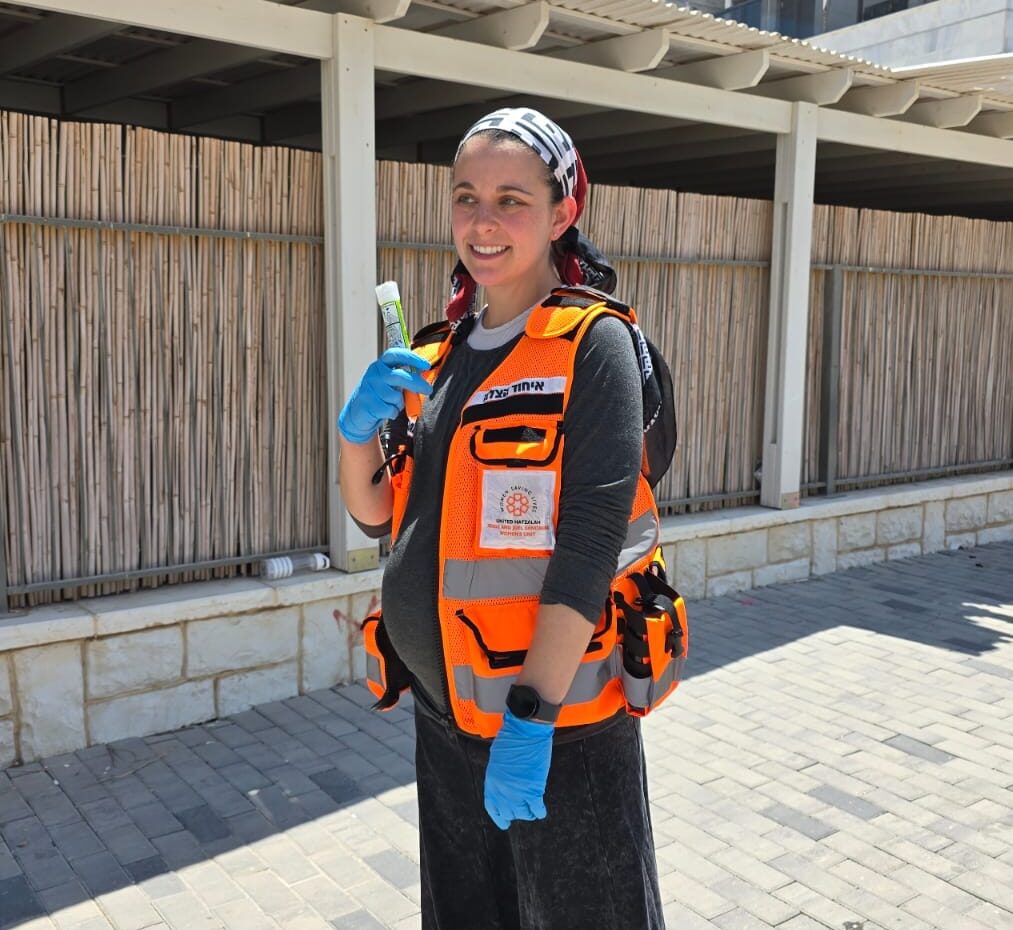
Similarly, in the central Israeli city of Beit Shemesh, EMT Tali Speigelman treated a one-year-old toddler who was also in the throes of a life-threatening allergic reaction. Thankfully, she had an EpiPen readily available and was able to administer it immediately. The child’s condition subsided, and the toddler was transported to the hospital for further observation and treatment.
The common thread in these emergencies is that United Hatzalah volunteers are trained to recognize the symptoms of a severe allergic reaction and have both the knowledge and the equipment necessary to treat it quickly.