

Between the Commotion and Cameras
Dear Diary,
It has been around 48 hours since the missile impact in Dimona, and I am only now beginning to calm down from the incident. Not physically, but emotionally. The noise, the chaos, the constant feeling of being pulled in ten different directions. I am finally able to quietly process the ordeal.
It is in that quiet space that I feel the need to write down what I experienced. Not as a report or a formal statement. Just to express my feelings, my truth of that fateful night. Of what it felt like to be there.
When we got the first warning alert, things were relatively calm; at least as calm as it can be three weeks into war. Then the siren came and the impact. I was among the first to arrive at the scene.
There are moments you walk into and immediately understand what is needed to get things under control. This wasn’t one of them.
There were almost no medical teams on scene yet. Just destruction. Confusion. Fear. At first, it was kind of silent. The kind that screams that tells you something is very wrong.
That’s when I ran in.
There were reports of people trapped in buildings. A smell of gas hung in the air. It felt like every possible dangerous scenario we trained for was at play all at once.
I knew there was no time to process, just to act like we were trained to.
At some point I realized it was just me and a firefighter covering an entire block of the neighborhood. Just the two of us. No backup yet. Instinct and training took over. We started going building by building. Checking to see if any residents were inside and needed our help to get to safety. Some were uncooperative. Some were frozen in fear. I found myself lifting people, one by one, through a kitchen window. Passing them across to the firefighter waiting on the other side.
In the middle of it all, another siren. Another interception overhead. And that wasn’t the only thing the sky had in store for us that night. Rain was about to begin falling. Rain in March. Practically unheard of. But through it all we kept going.
In the midst of the rescues, there was one moment that stood above all the others.
A family: the father, mother, and their children, including infant twins, a boy and a girl. I realized that the parents were frozen in a state of panic. They were disoriented and unable to find their way out of the apartment. I took one of the babies from the parents’ arms to calm them as much as possible. I guided the entire family out to safety, all while the rain was pouring down, the infant cradled in my arms.
Seven buildings. Patients everywhere. Injuries, shock, panic. I treated multiple patients in moderate condition. Not just light injuries. Not just anxiety.
When you are in the middle of the incident, numbers don’t matter; the only thing to matter is the treatment we provide.
Eventually, more medics arrived.
And then, the cameras came.
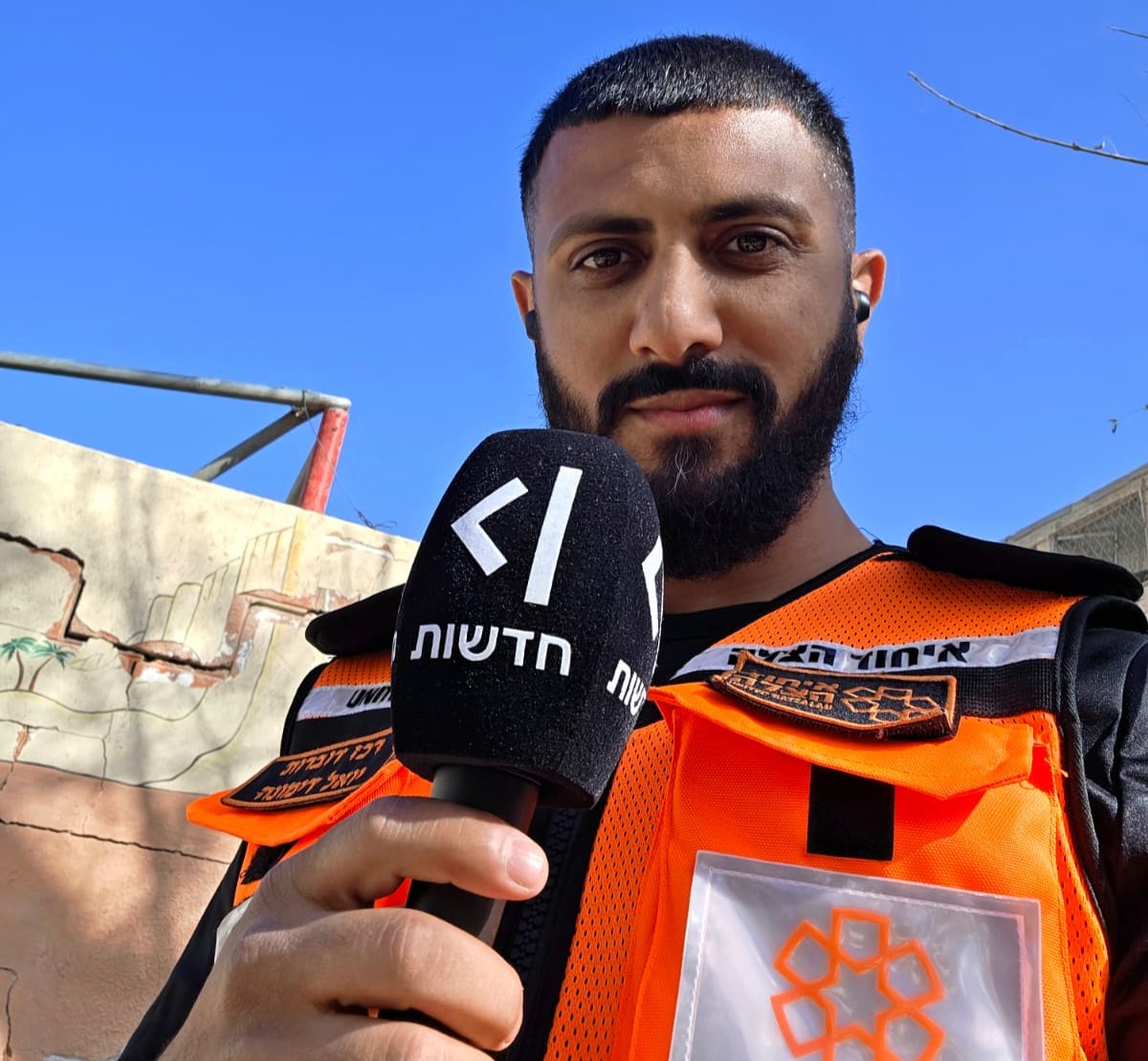
It is a strange transition. One minute, you are pulling people out of danger, and the next, you are expected to stand in front of a camera and explain what you did. Requests started coming in from everywhere. Television. Radio. Journalists.
The funny thing is, that is when the chaos really began for me. I know how to handle the emergency just fine. The press is another story all together.
You find yourself being pulled into position. Pushed aside. Asked the same questions again and again. Lights in your face. Microphones appearing out of nowhere. You repeat the same account until it starts to feel like you are describing someone else’s experience.
There were attempts to steer the conversation into places it did not belong. Into local disputes. Into narratives that had nothing to do with what happened on the ground. I refused. Clearly. Repeatedly.
That is not what United Hatzalah medics are there for. I am here to save lives.
There were also moments where journalists really listened to what I was saying. They understood what we experienced. They knew it was not just about a headline.
And then they all left, just like that. And I was there to pick up the pieces and do what I came for in the first place: help save lives.
For me, the next day did not slow down. There were security coordinations for high-level government visits. And even more interviews. It was like I had to keep switching roles between first responder and spokesperson and back again without warning. At one point,
This was my first real immersion into this kind of role. It was baptism by fire, in every sense. Looking back at it all, I think I learned quickly.
You have to know when to speak and when to stay silent. And most importantly, you have to stay focused on why you were there in the first place.
Now that two days have passed, I know I was never alone. There were people behind the scenes guiding, connecting, helping. Without them, many of the things I did, interviews and rescues, would not have happened at all.
For me, the one constant was the desire to represent United Hatzalah with pride and purpose. To highlight to the world what it means to wear that orange vest and be part of something larger than myself.
This is what went through on that fateful Saturday night in Dimona. And that is what I am still trying to process.