

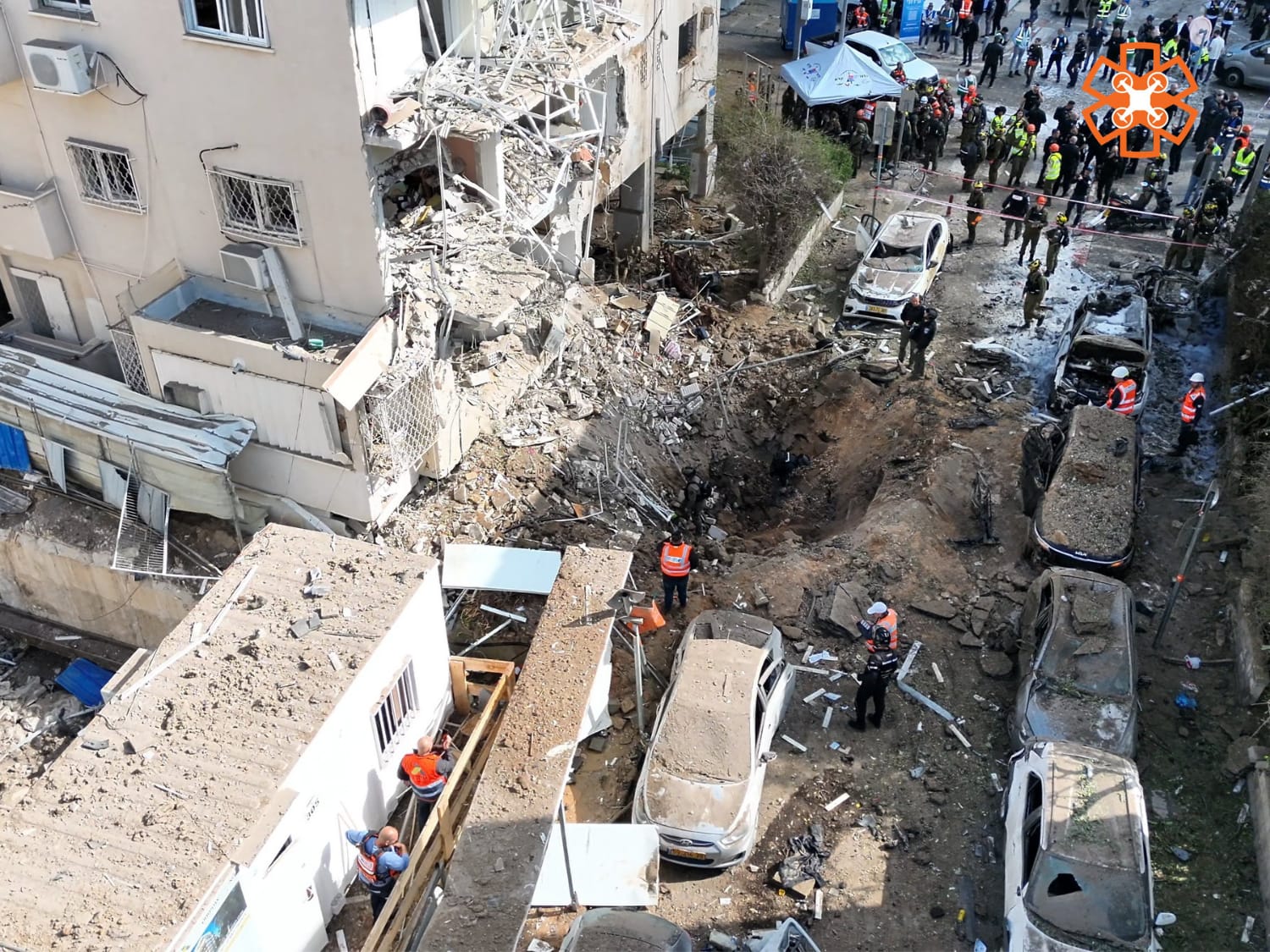
In the chaotic aftermath of a missile strike or disaster, every second carries weight. When the dust settles, uncertainty can fill the air. For first responders arriving on scene, the challenge is immediate. Where are the victims? Is the structure stable? Are our first responders safe to reach those who need our help?
Increasingly, the answers are not found on the ground, but from above.
Moshe Mizrahi is one of United Hatzalah’s trained drone operators. He is part of a specialized unit of United Hatzalah that has quietly transformed how we respond to emergencies in and outside of Israel. Equipped with advanced aerial technology and special training so they can operate in very high-pressure situations, Mizrahi and his colleagues provide critical assistance to emergency workers in some of the most dangerous environments imaginable.
“When we arrive at a scene, we are often dealing with the unknown,” Mizrahi explains. “Collapsed buildings, scattered debris, fires, or the risk of secondary explosions. The drone allows us to see the full picture before putting more lives at risk.”
Within moments of deployment, the drone ascends above the scene, transmitting real-time footage back to responders on the ground. From this vantage point, operators can identify trapped individuals using specialized equipment that identifies heat sources. The drone cameras can detect slight movement beneath the rubble, and the drone can enter a structure through small spaces to map out safe access routes for medics and rescue teams to reach those in need of medical treatment.
United Hatzalah’s drone unit is among the most advanced of its kind in the country, reflecting the organization’s broader commitment to innovation in lifesaving. Known for its nationwide network of more than 8,100 volunteer medics and its rapid response time, the organization has continually invested in technology that enhances both efficiency, safety, and care provided.
“There is no greater feeling than knowing you helped locate someone who otherwise might not have been found in time,” he says. “The drone, when used properly, is a lifesaving tool.”
As Israel continues to feel the brunt of Iran’s ballistic missile attacks, the role of aerial support in rescue operations is only expected to grow. For United Hatzalah, the integration of drones into frontline response is not a future ambition. It is already a daily reality.
These drones are our eyes in the sky, working tirelessly to ensure that more lives are saved and more rescuers return home safely.