

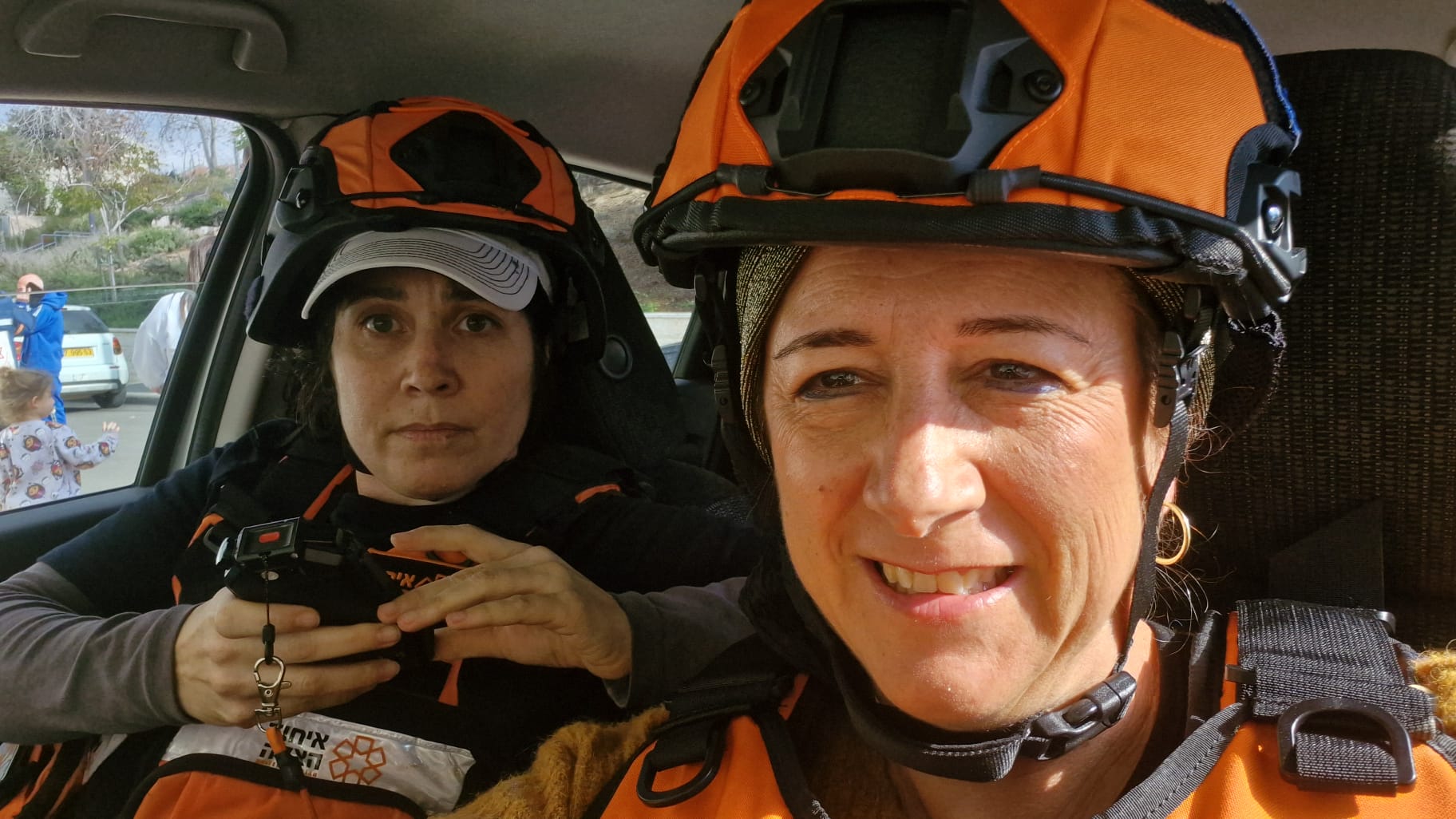
When missiles struck Israel, United Hatzalah volunteers rushed toward the scenes of impact while residents ran for shelter. Within minutes, medics were moving through damaged streets, treating the injured and calming frightened families.
Yet many of the most powerful moments unfolded after the sirens stopped.
Shoshana Lichtman, a United Hatzalah Nurse, Medic, Psychotrauma Responder, and Ten Kavod Volunteer had been treating victims at several blast sites. After Shoshana finished tending to the injured, she decided to reached out to a senior citizen she regularly checks on through United Hatzalah’s Ten Kavod program. Shoshana knew that given the chaos unfolding in the area, things would be very tense for the elderly woman, who depends on oxygen around the clock.
Unable to reach her home physically due to road closures from the missile attack, Shoshana decided she would video call the elderly women. Thankfully, she got through to her and managed to speak with both the elderly woman and her caregiver. Shoshana’s calming approach helped comfort the two and Shoshana began to coordinate a safe transfer to a facility outside the city where the elderly women would have uninterrupted access to much needed electricity and oxygen. Even after the women arrived safely, Shoshana continued to call to check up on her. With each conversation, she was able to lifts the women’s spirits.
At Hadassah Ein Kerem Medical Center, another United Hatzalah volunteer stepped quietly into a moment of unimaginable tragedy.
Muriel Ende, another United Hatzalah volunteer and a member of the Women’s Unit and Psychotrauma and Crisis Response Unit, had only just returned to Israel after being delayed in New York by a snowstorm. Within hours she was volunteering in the emergency room following the Beit Shemesh strike.
She was assigned to three children who had arrived alone.
Throughout the day Muriel remained beside them, offering psychological first aid and a steady presence as doctors treated their injuries. Late that night the devastating news arrived. Their mother, United Hatzalah medic Ronit Elimelech, and their grandmother, Sarah, had been killed in the attack.
The next day, at the funeral, the oldest daughter saw Muriel standing nearby and ran toward her. The two embraced and wept together beside the grave.
Elsewhere during the attacks, United Hatzalah medic and senior psychotrauma responder Shoshana Goldstein responded to a young mother who believed she was having a stroke.
Inside the family’s protected room, as sirens echoed outside, Shoshana determined the woman was suffering from a severe panic attack. The two sat and talked through the fear and exhaustion of caring for small children under constant alerts. By the time Shoshana left, the young mother was calm and breathing steadily again.
In another home, life began even as the sirens wailed. In the middle of the night, a frantic pregnant woman was in advanced stages of labor during a missile alert. United Hatzalah EMT Ryfki stepped into the situation and safely delivered the baby boy inside the safe room. Afterwards, another United Hatzalah female EMT arrived and prepared the mother and baby for transfer to the hospital. Both mother and baby were in good health.
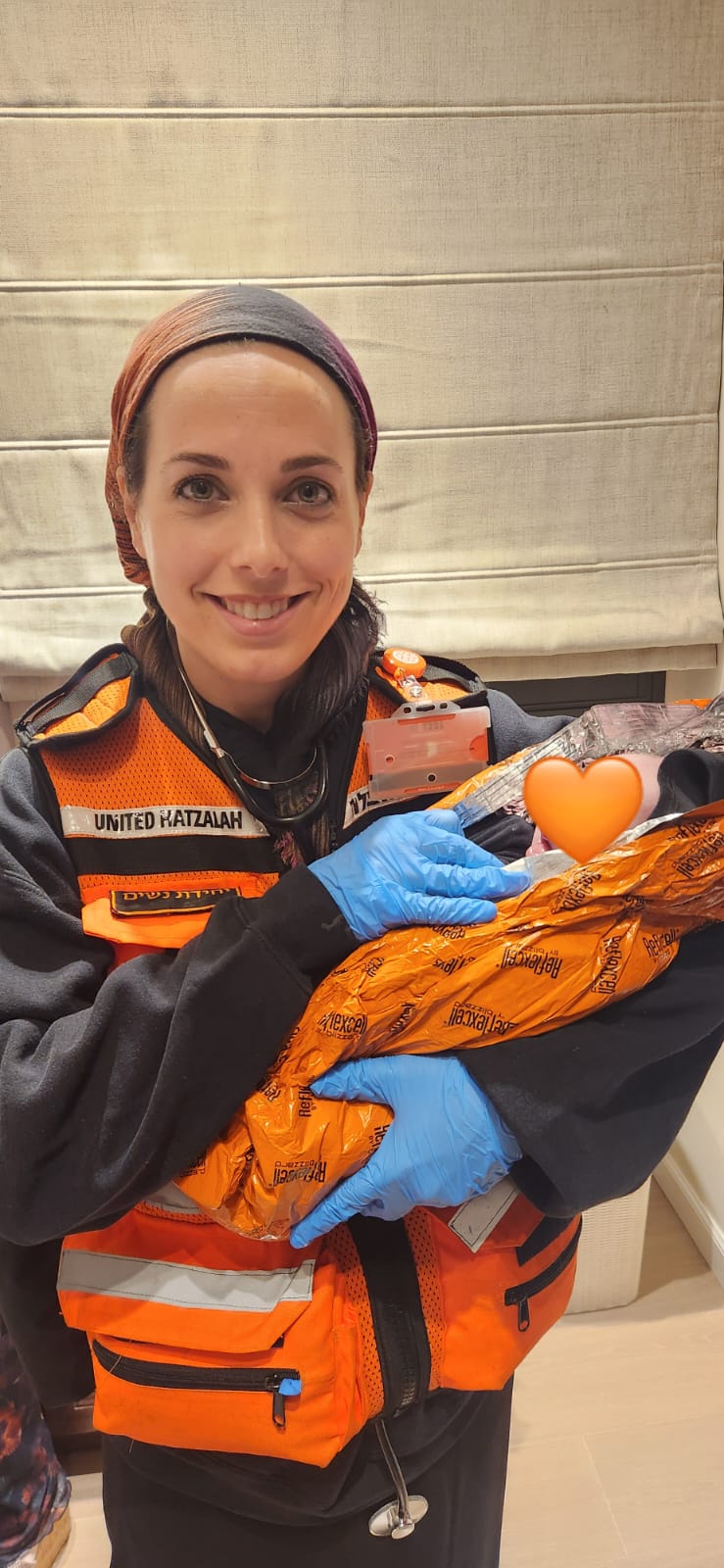
On Friday, as many rushed to prepare for Shabbat, disaster struck. This time in Jerusalem. A young child had a severe allergic reaction to a pet hamster his friend brought over to play with. Eyes and tongue swollen, the boy struggled to breath, Ryfki once again came to the rescue. Together with another EMT, Yair, they administered EpiPen and sent the boy to the hospital for continued medical treatment.
In the shadow of war, a new life entered the world.
For United Hatzalah volunteers, saving lives is not only about the dramatic moments of rescue. It is also about the quiet acts of compassion that follow. A reassuring voice on a video call. A steady hand in a hospital corridor. A calm presence in a protected room.
Long after the sirens fade, the mission continues.