From Bedtime Routines to Puppy Rescue
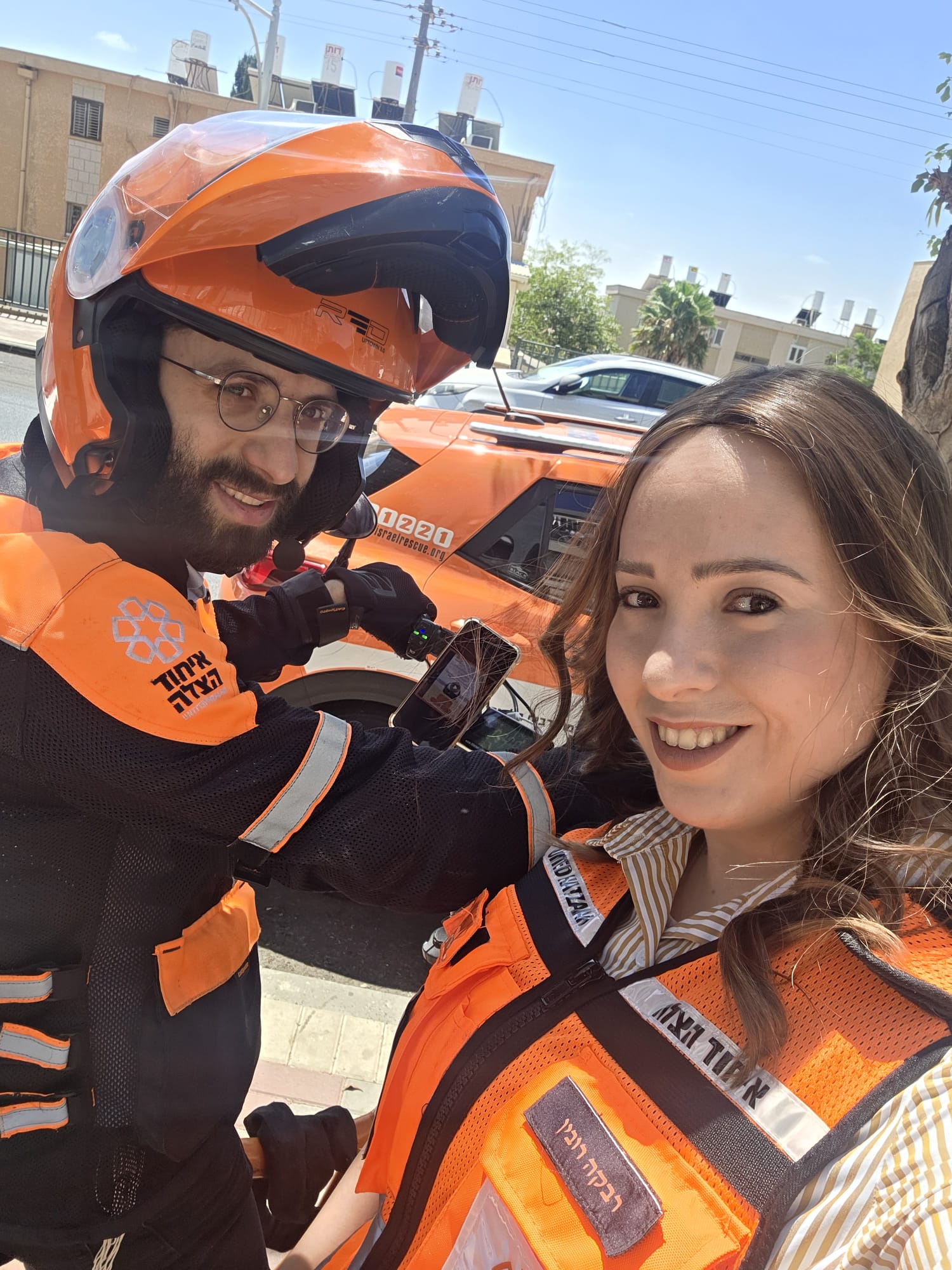
This is just what an ordinary evening looks like when both mom and dad are United Hatzalah first responders.
I was trying to put our daughter Tamar to bed when someone frantically knocked on the door. It was one of our neighbors. She was visibly distressed. She needed assistance for her son, who was injured in the parking lot and could not move his leg.
As I was busy with Tamar, Shmulik ran to help them.
He examined the boy, made sure that he was stable, and reassured both him and his frightened mother. Sometimes, our job is to reassure people, even before we bandage someone up, that help is here and that they are not alone.
However, while Shmulik was helping them, I heard a report over my United Hatzalah beeper. There was a serious traffic accident near the entrance to our neighborhood. The dispatcher reported that resuscitation efforts were underway. The scene was only two minutes away.
Within moments, we were on our way.
When we arrived, the road was covered in blood. A full medical team was already working intensely to save the critically injured patient. Enough responders were assisting with the resuscitation, but it quickly became clear that others at the scene also needed help.
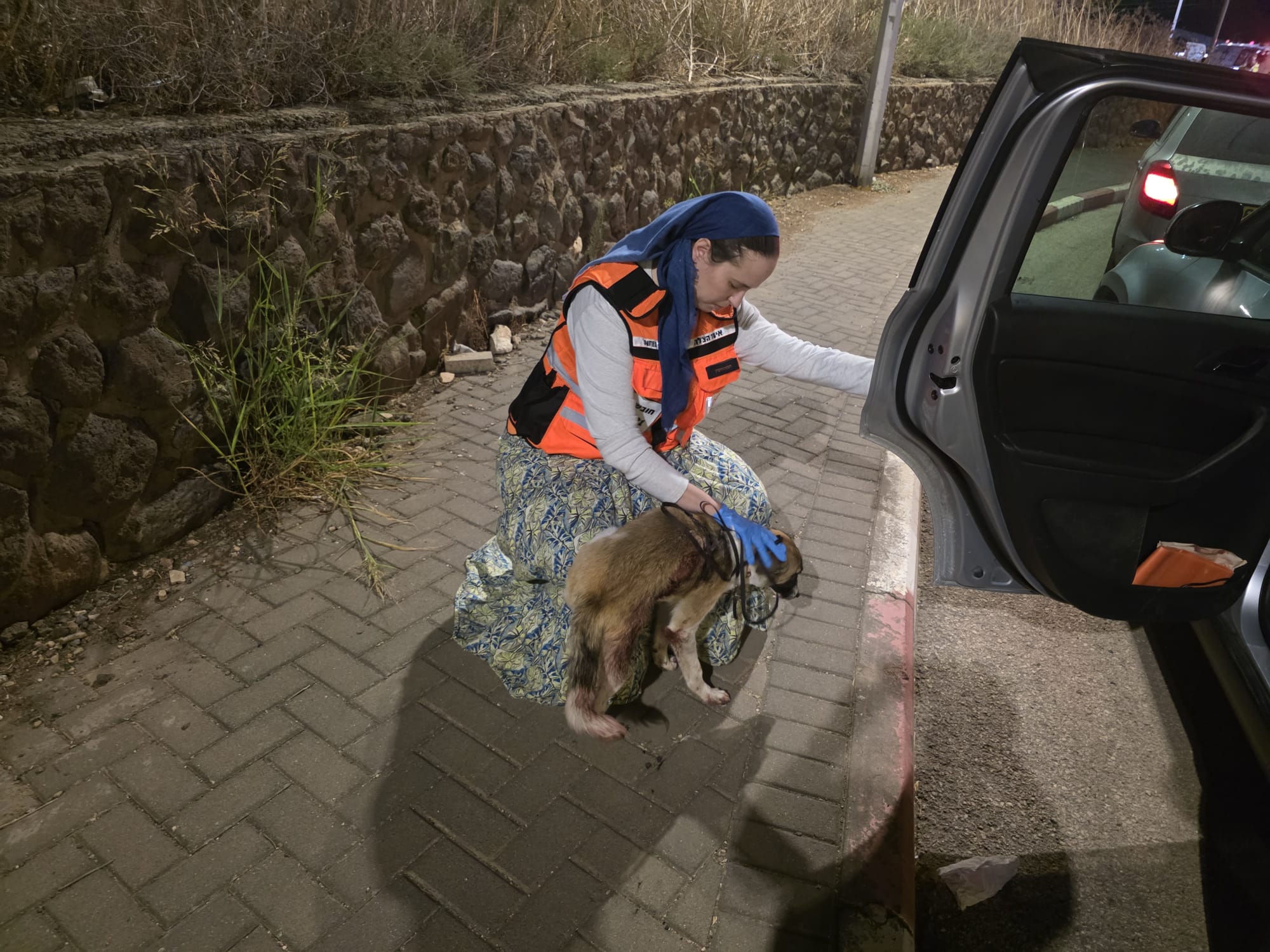
The person who was severely injured and receiving medical attention had a dog who was also hurt in the collision. The frightened animal needed someone to remain with it until a veterinarian arrived. The veterinarian who came to treat the dog was also a United Hatzalah volunteer. He had dropped everything and rushed to the scene, just as we had.
Also, there were children who had been inside the vehicle when the accident occurred. They had witnessed everything that happened and were in a state of shock and panic. Once Shmulik knew that their father was being transported to the hospital, he turned his attention to them.
While they were thankfully physically unharmed, as a volunteer with United Hatzalah’s Psychotrauma and Crisis Response Unit, Shmulik understood that not all injuries can be seen. He sat with them, spoke calmly, and helped them begin to process the terrifying moments they had just experienced.
During an emergency, it is easy to focus just on the physically injured patient. That person must, of course, receive immediate medical care. But an emergency rarely affects only one person. It can impact the people who witnessed it, even if they do not have any bodily harm. Family members can be scared while waiting for news; bystanders who tried to help or witnessed the incident can be affected by what happened; and in the case of a car accident, there are usually multiple parties to an incident. United Hatzalah has everyone covered.
Even after we left the scene of the accident, we passed a nearby store. The shopkeeper had seen the entire accident unfold and was deeply shaken. We stopped to speak with her and provided emotional support.
By the time we finished, she insisted on giving us each a slushy to show her appreciation.
This goes to show you that a normal bedtime routine can be interrupted by a call for help. This is the life of a couple of United Hatzalah volunteers. While we never know where the next call will take us, you can be certain that when someone needs help, we will be on our way.