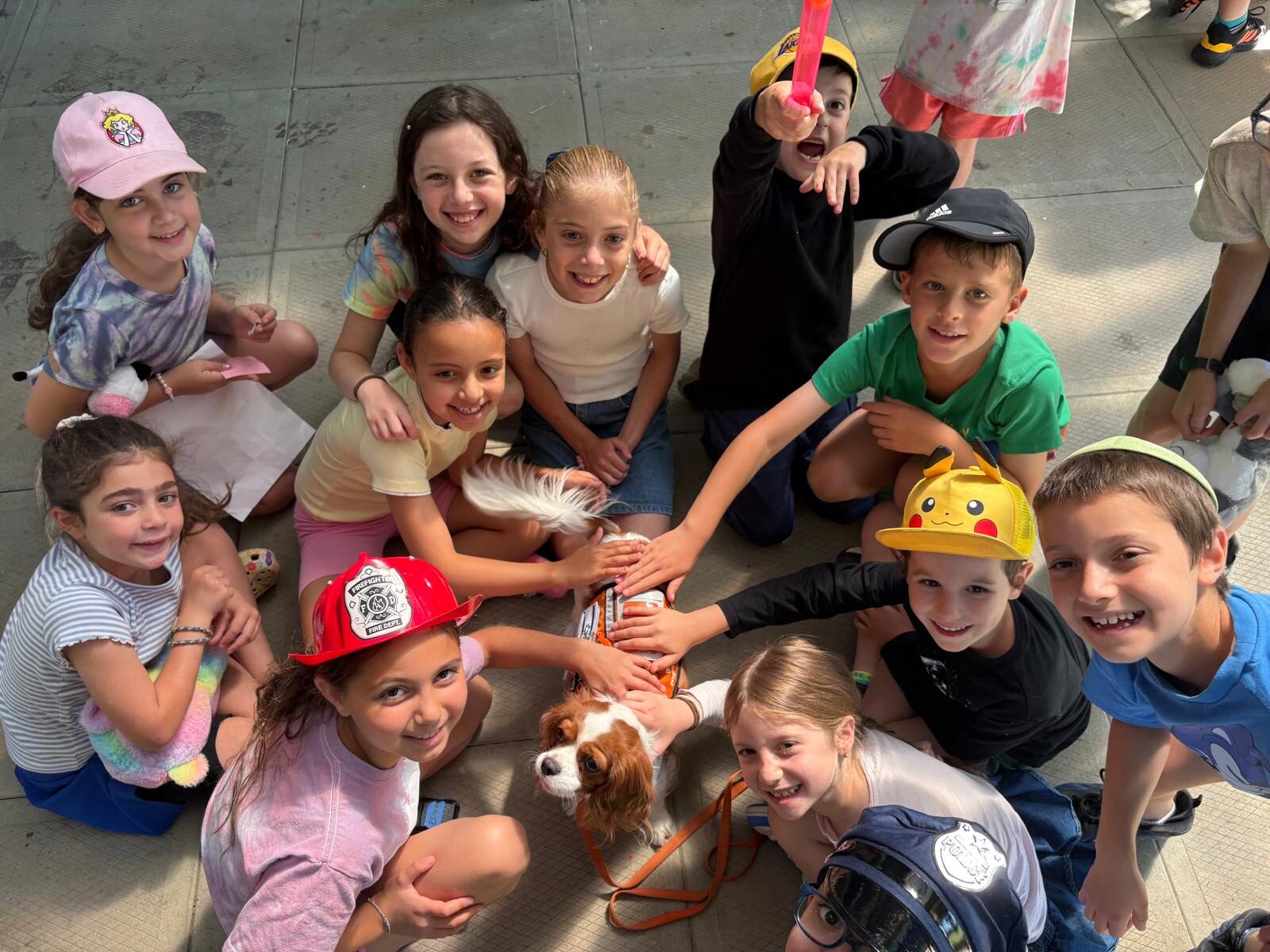
This past week, the campers at Camp Moshava Ba’Ir in Toronto arrived dressed for an important lesson.
Some came as police officers, while others were dressed as firefighters, doctors, paramedics, and emergency medical responders.
Among those taking part in the special day was Hadas Ruchman, Clinical Director of United Hatzalah’s Psychotrauma and Crisis Response Unit. Hadas is currently in Toronto with her family on shlichut and is actively involved in the local Jewish community.
She arrived at camp wearing her bright orange United Hatzalah vest, but she was not alone. At her side was Hope, an emotional support dog trained to assist people experiencing fear, anxiety, and emotional distress during emergencies. Hope came in her orange vest as well.
Throughout the day, the campers learned what it means to be a first responder and to step forward when someone is injured, frightened or in need of assistance.
The children brought their favorite dolls and stuffed animals to camp, transforming their beloved toys into patients for the day. Through a series of activities, they learned how first responders examine someone who has been injured, provide basic medical assistance, and help a patient who needs help.
While most of the activities involved the more physical aspects of emergency medical care, Hadas wanted them to understand that not every injury is visible.
“People can be hurt in many different ways,” Hadas explained. “Sometimes, when someone is frightened or overwhelmed, they may need help just as urgently as someone with a physical injury. I wanted the children to understand that in those moments, we can help by offering reassurance, comfort and emotional support.”
She also introduced the campers to the important role Hope plays as one of the unit’s emotional support dogs.
“Hope’s calm presence can help people begin to feel safe again,” Hadas said. “She can help them slow their breathing, relax and begin to cope with what has happened.”
Each camper was allowed to approach Hope, pet her and spend time playing with her.
For the children, it was an exciting day at camp. It was also an important lesson in compassion, responsibility and the many different ways we can help someone in need.
The campers may be too young to respond to real emergencies, but they are not too young to begin learning these essential lessons. “We hope that as these kids grow, the values they encountered in camp will remain with them for years to come.”
Aside from the fun everyone had, the Dress Up Day concluded with one simple but important message: If you see someone who is hurt or needs assistance, find a responsible adult and call for help.
For tomorrow’s first responders, these are the very first lessons.