Every summer, thousands of Jewish teens arrive in Israel seeking connection and inspiration, but mainly what they are looking for is to have a fun summer under the hot Israeli sun. They all expect to hike, swim and tour their ancient homeland. Few expect to leave with a firsthand understanding of what it means to save a life. Through United Hatzalah’s Leight Legacy Heroes Campaign, that understanding is becoming a reality.
The Leight Legacy Campaign is a growing initiative designed to empower young people to strengthen their connection to Israel through raising funds to purchase life-saving equipment —from oxygen tanks and defibrillators to fully equipped ambucycles—and help sponsor advanced training for United Hatzalah’s first responders across Israel.
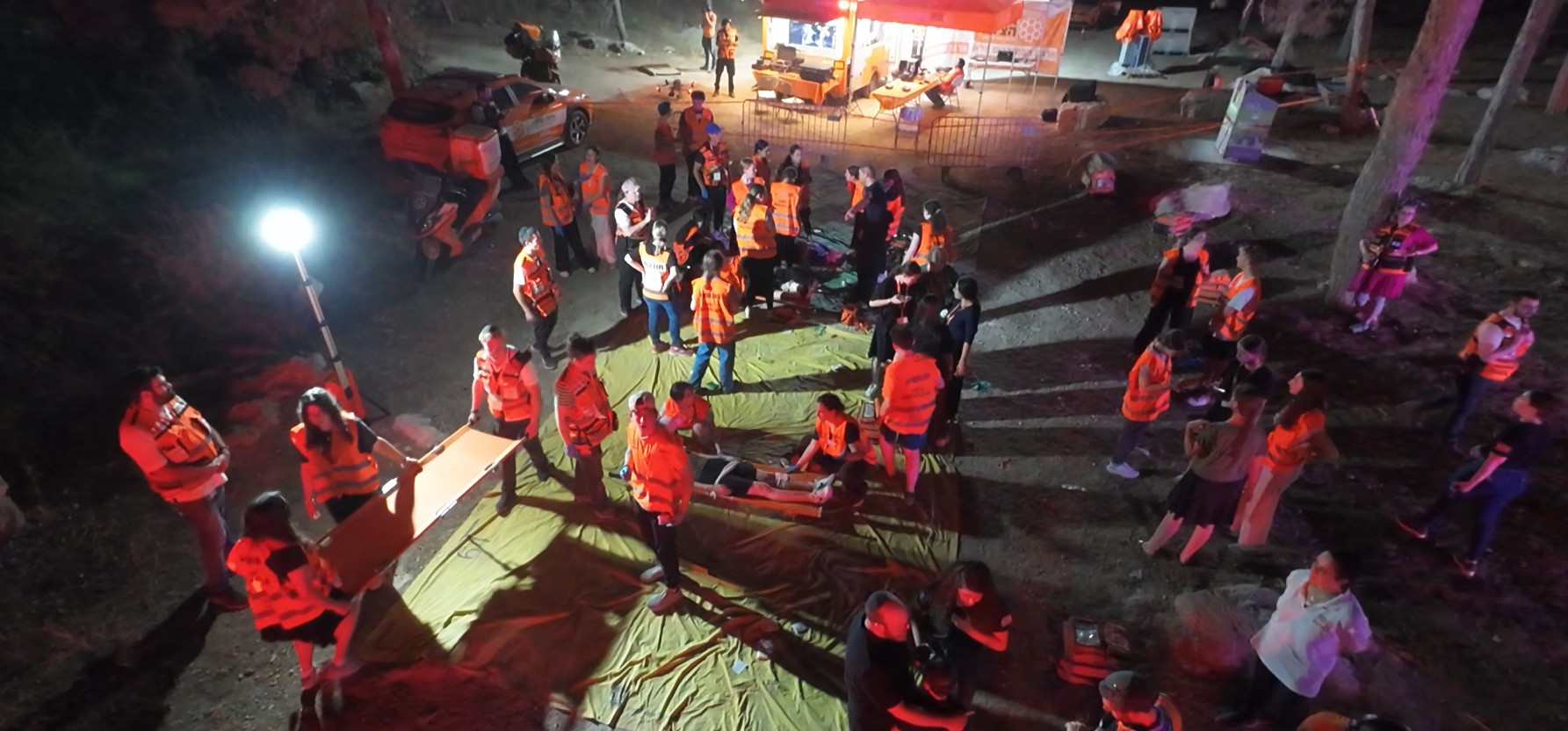
This past summer, the program expanded even further. NCSY Teen Tours took part in Mass Casualty Incident (MCI) drills, coordinated through United Hatzalah’s education department. These drills provided a rare exposure to the real-world training every United Hatzalah volunteer must complete.
The MCI drills were designed to be immersive. Professional medics staged highly realistic scenes using controlled smoke, simulated injuries, sirens, flashing lights, and trained role-players to recreate the chaos of a major emergency.
For many teens, it was the first time they understood how quickly a peaceful moment can turn into a crisis, and how essential trained responders are in those first critical minutes.
“I Was the First Responder”
“The second the drill started; my heart literally skipped 10 beats. While they prepared us and we all knew it was a drill, the noises, the shouting, and chaos of the moment felt real. I was assigned to help triage the wounded. We began tagging patients according to the severity of their injuries. I saw that we had only short seconds to make decisions that would impact someone’s life.”
These MCI drills are only as effective as the screams and wails of the ‘victims.
“People were calling for help. They were covered in fake blood. I remember having to remind myself that this wasn’t real because your mind and instincts tell you otherwise.” Each group of Leight Legacy Heroes was accompanied by an EMT guiding them and keeping them grounded. “Breathe. Look at the injury. Decide what needs to be done. That mantra kept on repeating over and over throughout the drill.”
The drill gave the participants a real glimpse in what a real mass casualty incident would look and feel like. “By the end, my hands were shaking, but I also felt something else I didn’t expect clarity. I realized how much responsibility first responders carry on their shoulder and how critical these training exercises are to developing muscle memory so that when the real incident strikes, they know what to expect and more importantly how to respond so that they can save as many lives as they can!”
Too often teens feel distanced from feeling that they can contribute to their lives, the betterment of their community and the greater society. This program shows teens how they can save lives too.
“We see how we can help and have an impact and be part of the process.”
“I Was the Victim”
Another teen experienced the drill from the other side – playing a victim.
“They put makeup on me—deep red streaks down my cheeks, a ‘gash’ on my leg, dust on my clothes. It wasn’t obscene, but it looked real enough that when I caught my reflection in a window, I was shocked.”
Lying on the ground red and blue lights flashing all around, I imagined what it would be like if this were an actual attack or accident. I heard the sirens getting louder, people running. When the volunteer EMTs reached me, the way they spoke—calm, focused—immediately made me feel safe.
I left the exercise knowing that raising money to buy medical equipment isn’t just a project, it really is a key part of saving lives.”
Inspiring the Next Generation of Givers
These drills aren’t designed to frighten teens. They are meant to educate, empower, and connect them to the responsibility we all share to protect one another.
By the end of the drill and summer, many participants said they felt a new sense of purpose. They understood why raising money for United Hatzalah is so important but they also knew how United Hatzalah is helping save lives of people all over Israel. They met and talked to responders and were inspired by their example. They realized that saving lives is not only a job for trained medics—it is a collective effort.
And they recognized that even as teenagers they have a vital role in the process. Most, if not all of them go back to their home communities with a mission and a purpose. At a time when many feel disconnected and disenfranchised by the unprecedented antisemitism and Jew hatred, this experience gives them pride and purpose and saves lives.