

As Red Alert sirens continue to echo across Israel during Operation Roaring Lion, the instinct for many is immediate and powerful. People move quickly to reach safety, gathering family members and heading for protected spaces. Yet amid the urgency of these moments, another reality has quietly emerged.
Over the past several days, United Hatzalah’s National Dispatch Center has recorded a noticeable increase in emergency calls related not to missile impacts, but to injuries sustained while people rushed to shelter. Volunteer medics responding across the country have treated a range of minor injuries including slips on stairs, sprained ankles, bumps, and bruises that occurred as individuals hurried toward safe rooms and shelters.
These incidents reflect the tension felt by millions of civilians who are living through repeated sirens and sudden alerts. While reaching shelter quickly is essential, moving too hastily can create additional risks.
In response to these calls, United Hatzalah has released two public service videos aimed at helping the public navigate both the physical and emotional challenges of life during wartime alerts.
Getting to Shelter Safely
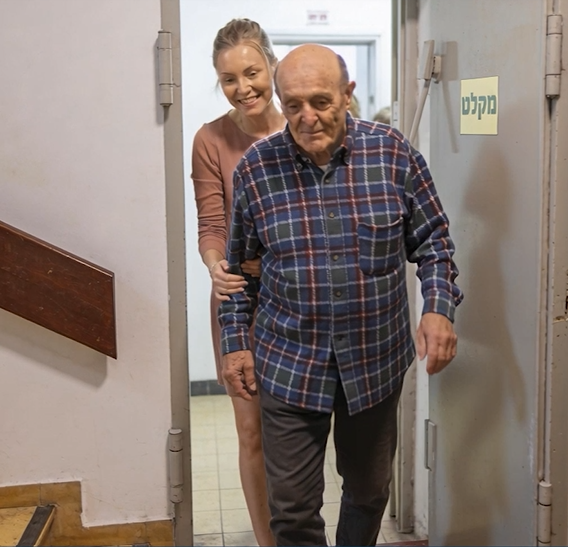
The first video focuses on something simple but critical: how to reach a protected space safely when the siren sounds.
The guidance encourages residents to think ahead and prepare before the next alert arrives. Planning the route to the nearest protected space in advance, ensuring that pathways are free of obstacles, and avoiding rushing recklessly, particularly on staircases or in crowded areas, can significantly reduce the risk of injury.
Another important step is preparing the safe room itself. By placing essential items inside the shelter beforehand, families can avoid scrambling to collect belongings during the brief seconds available to reach protection.
These small steps help ensure that when the siren sounds, the path to safety is clear and the movement toward shelter remains quick but controlled.
Caring for Emotional Resilience
Alongside physical safety, the emotional toll of repeated alerts and uncertainty can also be significant. For this reason, United Hatzalah’s Psychotrauma and Crisis Response Unit released a second video offering practical tools to help people manage stress during this period.
Hadas Ruchman, a social worker and professional director of the unit’s resilience program, explains that prolonged uncertainty often leads to racing thoughts and overwhelming feelings.
“Periods of uncertainty can make our thoughts race forward,” Ruchman explains. “Everything around us can suddenly feel very overwhelming. What can help is focusing on here and now. Asking ourselves what might help me in this moment. What can give me a small sense of calm.”
She emphasizes that restoring balance does not require dramatic actions. Often, small everyday activities can help steady the mind.
“These do not have to be big things,” Ruchman says. “Listening to a song that makes you happy, taking a relaxing shower, drinking a cup of coffee, going for a short walk, or speaking with someone close to you can help reduce stress.”
The video also introduces a grounding method known as the five senses exercise, a technique designed to bring attention back to the present moment. Participants are encouraged to focus on five things they can see, four sounds they can hear, three sensations they can feel, two smells they can identify, and one taste.
This simple exercise helps restore a sense of control and focus during moments of anxiety.
Supporting the Public Throughout the Crisis
United Hatzalah’s Psychotrauma and Crisis Response Unit has been active throughout Operation Roaring Lion, responding to missile impact zones and assisting civilians experiencing anxiety, shock, and other emotional reactions to the ongoing situation.
At the same time, thousands of United Hatzalah volunteer medics remain on standby nationwide, ready to respond at a moment’s notice to any medical emergency.
As the situation continues to evolve, United Hatzalah urges the public to follow all Home Front Command safety instructions and to proceed carefully when making their way to protected spaces during alerts.
In moments when seconds matter, preparation, awareness, and calm can make all the difference.