

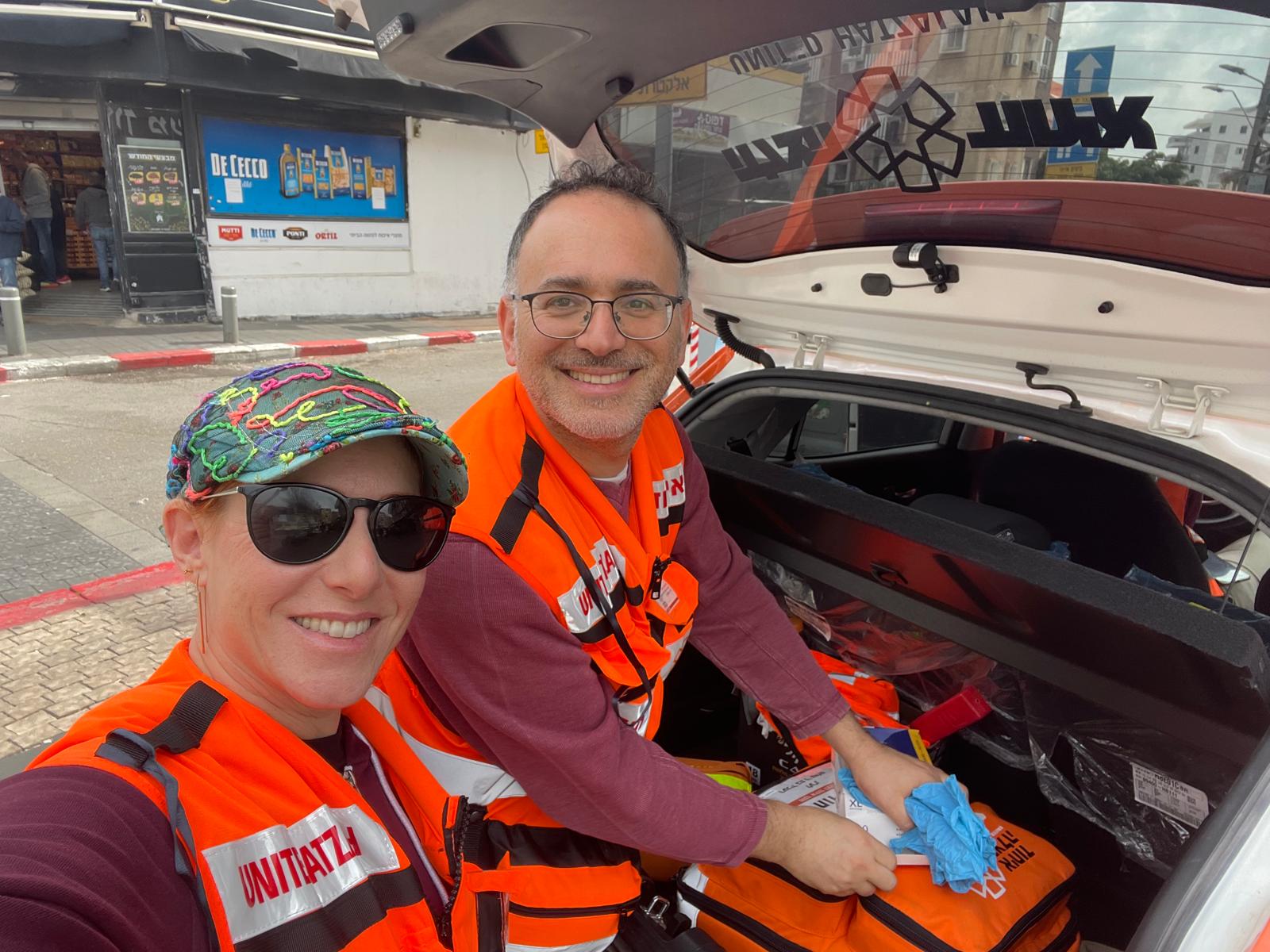
This Shabbat my wife Yael and I signed up to be the on-call United Hatzalah medics for our area. It was Yael’s first time taking a Shabbat shift. Thankfully it wasn’t a particularly busy shift, but it was still meaningful.
Over the course of Shabbat we went to the bomb shelter three times, once during Friday night dinner and twice during the day.
During the night a pre-alert woke us, so we got dressed and ready to run to the bomb shelter, though the siren never sounded. As we trudged back to bed, I remembered a joke circulating lately that Israelis are the only people who get frustrated when the early warning goes off but the siren never comes, because it means no one is actually sending a missile toward you.
Something similar played out on the Hatzalah front as well. During dinner we heard a call on the other side of town, the only call in our area all Shabbat. We were ready to head out, but a doctor who volunteers with United Hatzalah answered first, and since he was much closer, we stayed put.
Of course, no one actually wants the siren to sound, and no one hopes that there will be a medical emergency. But when you’re on call, you prepare yourself for that possibility. You get dressed. You get ready. You are willing to go, even if the call ends up being handled by someone closer, or the siren never comes at all.
That’s what it means to be on call, to live in that space between readiness and restraint. It’s a good thing when nothing happens, when the night stays quiet, when help isn’t needed after all. But being ready matters, so when there’s an emergency, United Hatzalah volunteers are always prepared to respond.