

When you dial for help in Israel, every heartbeat counts. For Director of United Hatzalah Innovation, Vice President of Operations, and a founding member of United Hatzalah Dov Maisel, that truth is not simply an abstract statement, it’s a life’s mission. It’s the lens through which has influenced his personal and professional life.
“I was in third grade when I saw a young girl killed by a bus right in front of me,” he recalls. “Despite being surrounded by a crowd of people, no one was able to help her in time. The feeling of helplessness never left me.”
By the age of 14, Dov already set his life’s career and mission in motion by volunteering with the ambulance corps in Israel. It was the late 1980s, and he joined side-by-side with Eli Beer, a year his senior. The two would go on to co-found what would become United Hatzalah, Israel’s now-legendary all-volunteer emergency medical services (EMS) network.
United Hatzalah was formally established in 2006 during the Second Lebanon War, born from a belief that the difference between life and death is often just a matter of minutes—or even seconds.
“We saw the need to build something that would deliver care faster than it was happening at the time,” Dov says. “We thought that if only we could embed first-responders in each of the communities we were working in, wouldn’t that be the best way to reach emergencies as they occur.”
A Movement, Not Just a Mission
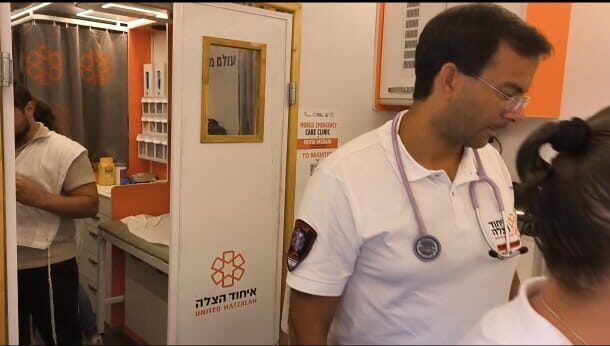
Today, United Hatzalah boasts over 8,000 trained volunteers across Israel. These men and women—teachers, software developers, retirees, medical professionals, students, even a garbage man—answer over a thousand emergency calls a day. Each volunteer medic is equipped with the tools and training to deliver lifesaving care.
“The power of United Hatzalah is that we’re just ordinary people doing extraordinary things,” Dov says. “People sometimes ask, ‘How do your volunteers leave their families or jobs to help a stranger?’ There is no complex answer. We are driven by a desire to help others in need. It’s just who we are.”
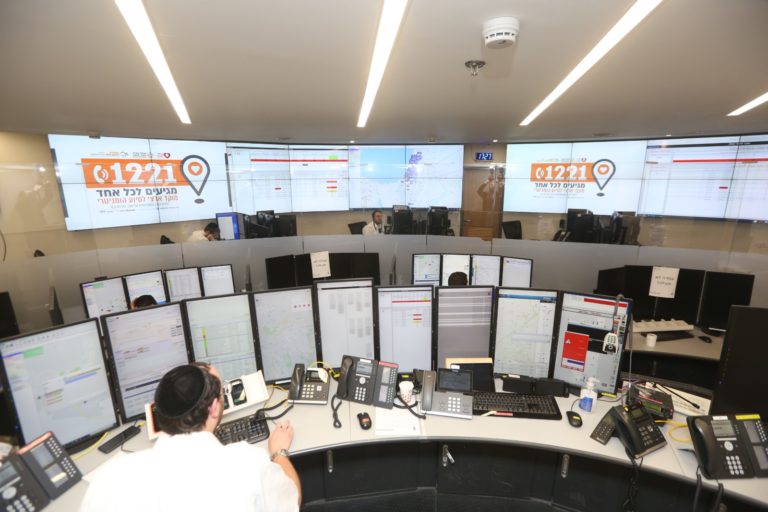
The dispatch model is powered by what Dov calls the “Uber system for emergency response.” Just as an app connects a rider to the nearest driver, United Hatzalah’s tech platform instantly locates and alerts the closest available medic.
“When you call our central national dispatch center, our dedicated operators, who are trained medics themselves, use a system that automatically knows exactly who is closest and alerts them immediately.
Just like your trusted Uber driver, our logistical brilliance is getting the care to those in need quickly and efficiently. But this is just the tip of our innovative side.”
Predicting Emergencies Before They Happen
Under Dov’s leadership, United Hatzalah Innovation (UHI) has expanded far beyond reactive care. The newest frontier: AI-powered predictive EMS technology.
“We’re now able to forecast, with up to 90% accuracy in urban areas, where the next emergency is likely to occur,” Dov explains. “That allows us to proactively position medics and equipment before the call even comes in.”
This groundbreaking capability relies on massive data inputs: past emergency patterns, real-time traffic, demographic data, and even national trends provided by Israel’s Bureau of Statistics. UHI’s AI model analyzes these streams to map emergency risk zones in real time.
“It’s not about guessing,” Dov says. “It’s about giving our medics a head start. If we know where a heart attack, car crash, or asthma attack is likely to happen, we can pre-position equipment in the area so that we can arrive on the scene faster. And faster means lives saved.”
From Gadgets to Global Strategy
While headlines are full of technological advancements and contributions of AI algorithms, our new electric Ambuscooters are the latest gadget to hit the streets of Tel Aviv and Jerusalem. Able to weave through congested gridlock cities, like Tel Aviv, the Ambuscooter can help get a medic to an emergency with his full medical bag, quick.
“For me, innovation is also about developing new gadgets,” he says. “It’s about making something old work better. It’s about using tools and teamwork to reduce response time, because that’s the difference between CPR success or failure. These tools are real game-changers.”
But his goals are broader still. By 2026, he hopes to double United Hatzalah’s ambulance fleet—from nearly 100 to 200. “This will not only expand our coverage in underserved areas it will help our ability to handle mass casualty events.”
And beyond the hardware, Dov helped redefine the organization’s image. He led the shift from United Hatzalah’s original red, blue, and white branding to its now-iconic orange—a bold color worn proudly by thousands of responders known across Israel as “The Heroes in Orange.”
A Mission That Never Sleeps
When asked what keeps him going after three decades of emergency work, Dov doesn’t hesitate.
“In Israel, emergencies don’t wait for business hours,” he says. “We need to be ready at 3 a.m. just as if it was 3 p.m.”
The model works because it’s woven into the fabric and essence of Israeli society. A society that considers social mutual responsibility holy and care for others as normal behavior.
Another source of pride for United Hatzalah is that the more than 8,000 volunteers come from every walk of life in Israel. They are Muslim, Jewish, Christian, Druze, and more. Each group showing up together ready to serve.
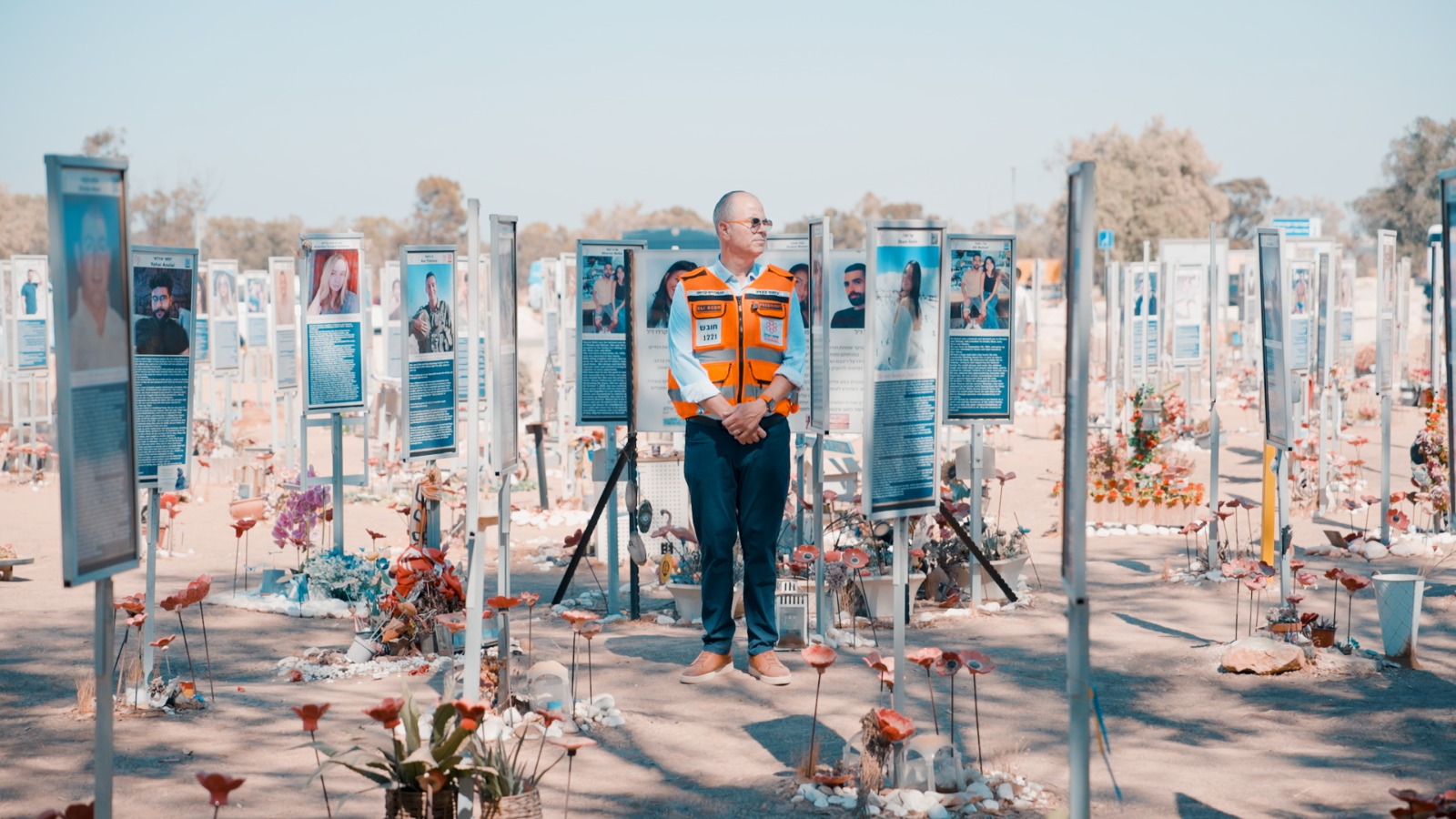
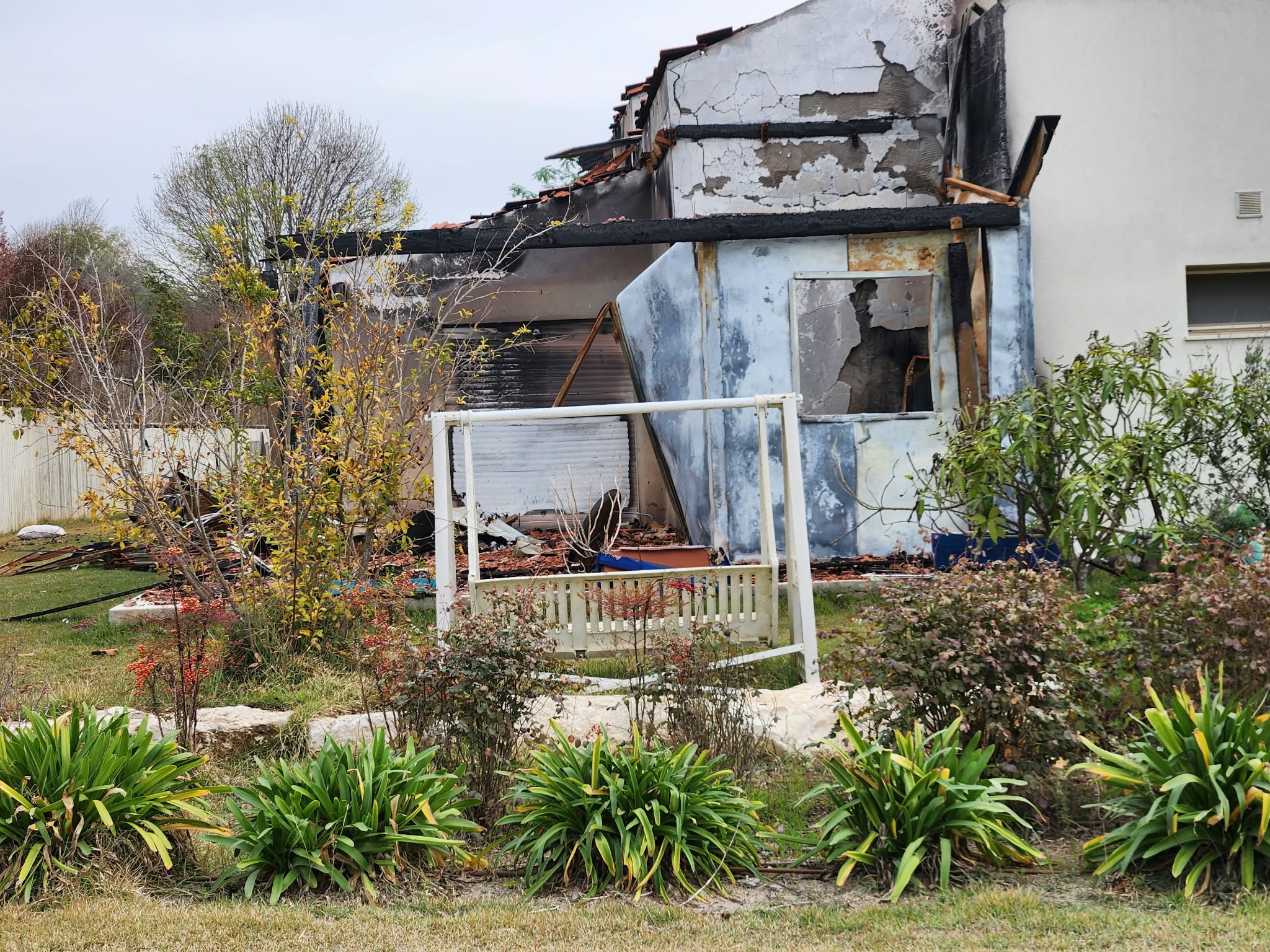
Even during the devastating events of October 7, 2023, and the war that followed, our diverse teams responded under fire, helping treat countless victims, and working for days in unimaginable conditions.
“We lost some of our members that day, including one Muslim member. October 7th was unlike anything I’ve seen in my life. But it wasn’t shocking since we knew very well what our organization is made of.”
Looking Forward: 2026 and Beyond
Dov Maisel isn’t done. He sees a future where predictive EMS becomes standard practice worldwide, where United Hatzalah’s technology and training can be shared with other countries, and where no person dies waiting for help simply because they were too far away.
“We built this from the ground up,” he concludes. “Now we’re building it forward for every person, in every neighborhood, who might need us tomorrow.”