As Israel continues to confront the ongoing missile attacks from both Iran and Hezbollah, President Isaac Herzog arrived Wednesday morning at United Hatzalah’s National Headquarters in Jerusalem to witness firsthand the extraordinary civilian emergency network operating behind the scenes of the war.
From the outside, our headquarters appear almost low key and unassuming. There are always the iconic orange vehicles and ambucycles outside. Inside, however, a whole national lifesaving operation is in full swing. Screens flicker with incoming alerts. Dispatchers field calls from across Israel. Volunteers in orange vests wait for the next alert that will send them racing through city streets and country roads toward people in distress.
President Herzog toured the facility alongside senior leadership of United Hatzalah and received a detailed operational briefing about the organization’s response since the outbreak of the conflict. The visit offered a rare glimpse into how our more than 8,100 volunteer medics are mobilized within seconds when missile sirens sound and emergencies unfold simultaneously across the country.
Staff members explained how the center manages dozens of developing incidents at once. While one team directs responders to missile impact sites, others coordinate medical treatment for injured civilians, rescue individuals trapped in damaged buildings and deploy psychological support teams to neighborhoods shaken by the attacks.
During the tour, President Herzog was also introduced to some of the specialized capabilities that have become essential during wartime operations. Among them is United Hatzalah’s drone unit, which works in coordination with Israel Police and Home Front Command to survey disaster scenes from the air. The drones help locate victims, map debris fields, and guide rescuers through dangerous or unstable environments where visibility is limited.
The visit also highlighted a less apparent but equally critical dimension of emergency response during wartime. Members of United Hatzalah’s Psychotrauma and Crisis Response Unit briefed the President on their work providing immediate emotional stabilization to victims and families affected by missile strikes. Trained volunteers often arrive at scenes where physical injuries may be minor, but the psychological shock is profound.
Alongside the therapists was one of the unit’s therapy dog. Fiona, is another member of our Orange Family, just like her human counterpart. She is specially trained to comfort victims at disaster scenes. In the chaotic aftermath of an attack, the presence of the animals can help calm children and adults alike, allowing first responders to provide emotional first aid during moments of extreme stress.
One of the most poignant moments of the visit came when the President participated in the dedication of a new emergency response vehicle donated in memory of United Hatzalah volunteer Ronit Elimelech, who was killed last week in a missile strike in Beit Shemesh. Members of Ronit’s family stood beside the vehicle as it was unveiled, a powerful reminder of the human cost of the war and of the courage of those who continue to serve on the front lines of civilian rescue.
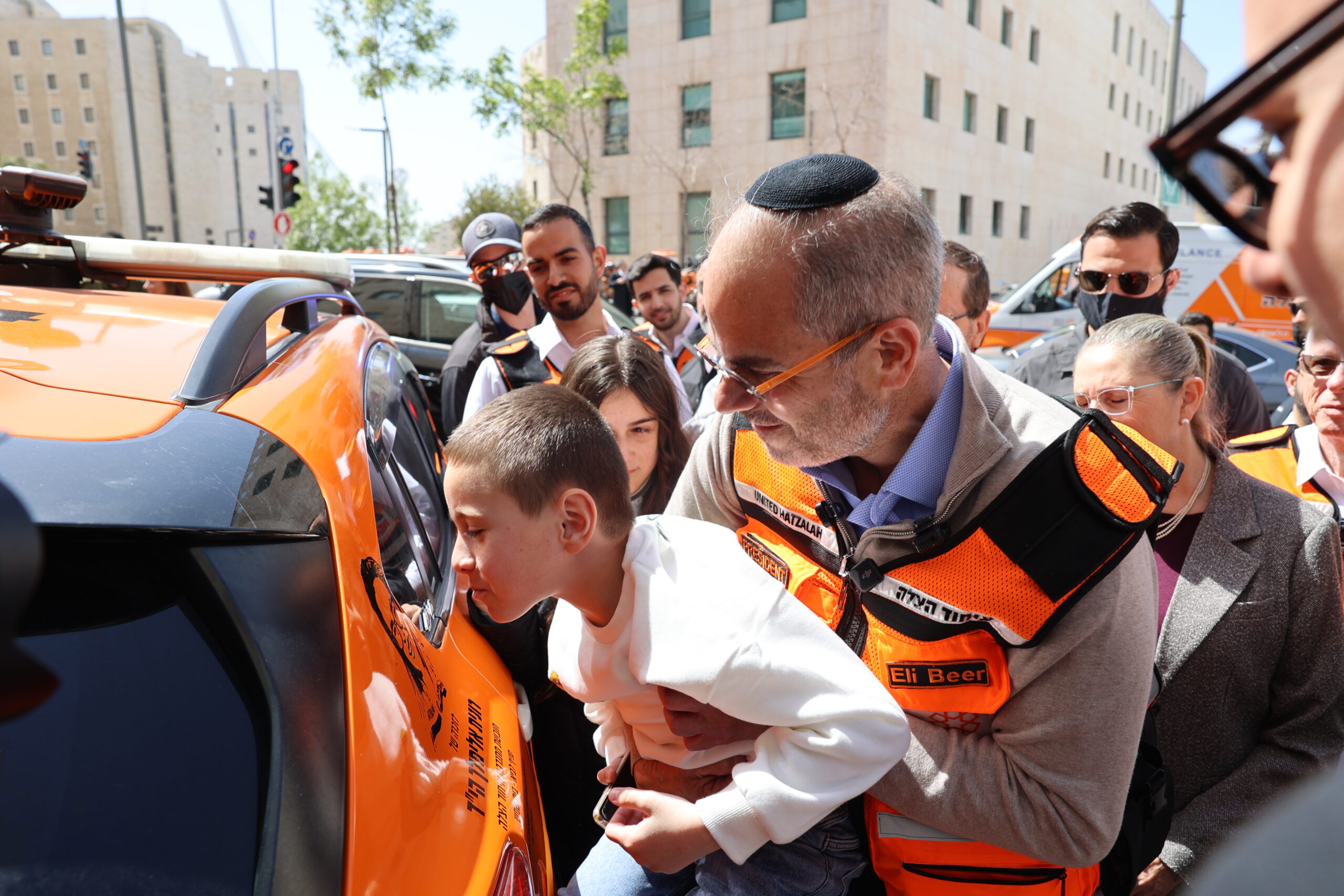
“United Hatzalah is one of the first emergency and rescue organizations to arrive on the scene,” President Herzog said. “We have seen the enormous volume of calls coming into the command center the moment launches occur. Volunteers rush out to save people who are injured while running to shelters, and of course they save lives during tragic disaster events as well, which unfortunately we have also experienced.”
United Hatzalah President and Founder Eli Beer said the President’s visit was a powerful expression of national recognition for the volunteers who continue to operate under fire.
“President Herzog’s visit to our headquarters is a meaningful recognition of the critical role our volunteers play in Israel’s national resilience,” Beer said. “Our volunteers are a different kind of human shield,” he added. “They protect the sanctity of life of the citizens of Israel. The Heroes in Orange leave their families behind and run toward danger to save lives, both physically and emotionally.”
As the war continues, Beer emphasized that the organization’s volunteers remain fully mobilized.
“We will continue to respond wherever we are needed and provide lifesaving care to every person in Israel regardless of ethnicity, background, or religion.”