

A Call I Will Never Forget
This call did not end the way so many emergency calls end. There was no sigh of relief. No grateful smile from the family. No moment when everyone in the room suddenly felt the weight lift.
But I will never forget it.
It was about 11:00 p.m. when my United Hatzalah pager went off.
A person in distress.
It started out like a standard call. I did what I almost always do when the alert comes in from the United Hatzalah Dispatch Center. I grab my medic bag, put on my coat, run out the door, and get into my car. Within moments I’m driving away, enroute to the address that our dispatch operator provided.
When I arrived at this call I found an 87-year-old women unconscious. Her caregiver was standing nearby, frightened and unsure what to do.
Together, we lowered the patient to the floor so I could begin treatment.
Almost instinctively, I began running our CPR protocol. Check for pulse and breaths. Compress. Count. Ventilate. Hope.
It was late, and I was alone.
As a first responder, first in Teaneck, New Jersey, and now in Jerusalem, I have learned how quickly a quiet room can become the center of someone’s entire world. I first understood that years earlier, not as a medic, but as a patient. During my freshman year of high school, I had a severe allergic reaction and had to administer an EpiPen to myself. Not long after, I was in the back of a Teaneck ambulance on the way to the hospital.
That experience changed me. By the end of my junior year, I had completed my EMT certification.
Now, years later, I was the one kneeling on the floor beside a patient, trying to keep him alive.
For several minutes, I continued chest compressions alone. CPR is exhausting, but stopping is not an option. You push through the strain because every compression is another chance.
Eventually, the ambulance crew arrived. And with their arrival, someone to take over compressions. Not because I was finished, but because I could now help in other ways. I attached the leads of our defibrillator ready to press the button.
For nearly forty minutes, we fought to save her life. We did everything we could. But despite every effort, the paramedic eventually pronounced the patient deceased.
I walked out of that call devastated.
Some calls end that way. It would be comforting to believe that every time we arrive at an emergency, we save a life. But that is not reality. As first responders, we train so that lifesaving protocols are second nature, but we also train to handle heartbreaking outcomes.
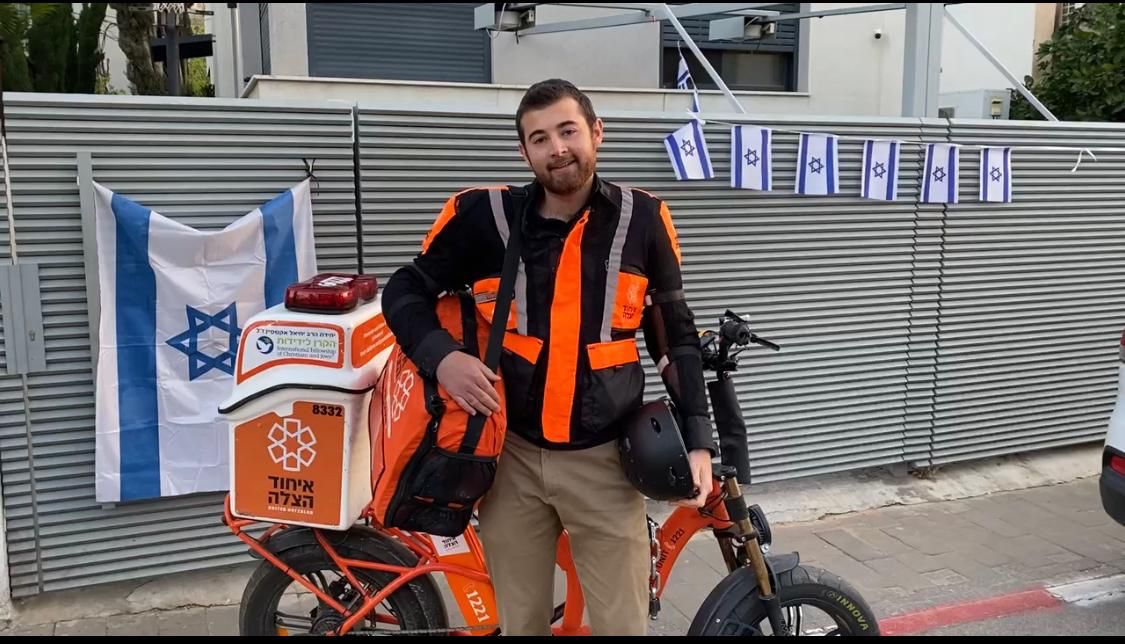
After the call, I sat in my car, trying to absorb what had just happened.
A few minutes barely passed, and another call came in.
This time, chest pains. It was only a short distance away.
That meant one thing. Break time was over. Someone else needed help. I started the car and drove off to the next call.
When I arrived, I found another woman in distress. This time, she was exhibiting symptoms that immediately concerned me. I assessed her, asked the right questions, and quickly realized that this appeared to be a cardiac event. After confirming there were no contraindications, I administered aspirin.
It was a simple action. But in emergency medicine, even the simplest remedies can change everything.
A short time later, the ambulance arrived. The crew took over care and thanked me for recognizing the signs and giving the aspirin quickly. They told me it likely helped save her life.
I stood there for a moment, overwhelmed by the contrast. In the span of one hour and a few blocks, one patient lived, and the other died.
It is painful, but it is true. Sometimes we can do everything we are trained to do, and the outcome is not what we want. It’s out of our hands.
But we keep on going and hoping.