

More than 1,200 people murdered. 251 hostages. 1,094 days. 970 fallen soldiers.
These are not abstract figures. They are the reality Israelis have been living with for three years and counting since that Black Saturday in October 2023.
Three years later, the wounds remain fresh and the loss, at times, excruciating. The Jewish people are still picking up the pieces, still trying to recover from the greatest tragedy to befall them since the Holocaust.
Three years later, we are still trying to understand what happened.
At 6:28 on the morning of October 7, 2023, Israel awoke to sirens. Rockets streaked across the sky. The holiday of Simchat Torah was shattered as Hamas terrorists crossed into Israel with one objective: murder.
Entire communities were trapped inside their homes. Young people who had simply wanted to dance were now prey to beasts that roamed through the fields surrounding the Nova music festival near Re’im. Roads that should have been quiet that holiday morning became the final resting grounds for abandoned cars and bodies of the people who had tried to flee.
Even as Israel’s leaders struggled to understand the scale of what was unfolding, a group of men and women began to move south.
They were not soldiers. They were not acting on military orders. They proceeded southward despite warnings from security forces telling them to stay away. All they had were orange vests, medic bags, and an overwhelming need to reach people who needed help.
That day, more than 1,500 United Hatzalah volunteers left synagogues, homes and families and headed south. They did not know what they were driving into. No one could have imagined it. They knew only that people needed help.
“I didn’t know what was going to be,” recalled United Hatzalah paramedic Gitty Beer, founder of the Adele and Joel Sandberg Women’s Unit and one of the first medics to rush south that morning. “I felt like I was in another dimension. There were bodies everywhere, smoke everywhere, sirens everywhere. It was just surreal.”
Throughout the day and night, volunteers treated the wounded, evacuated patients, and helped recover the dead, all while knowing that another attack could come at any moment.
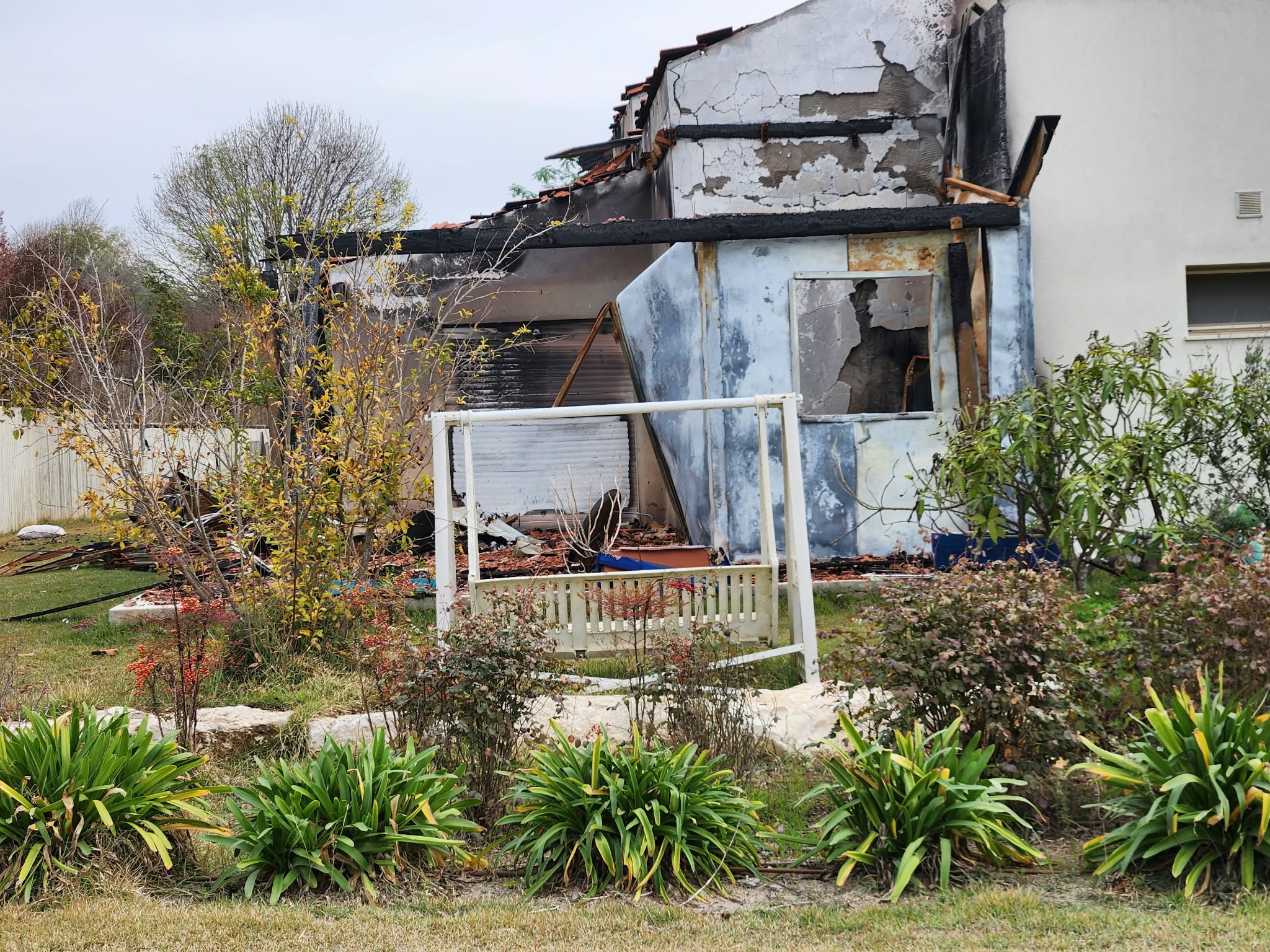
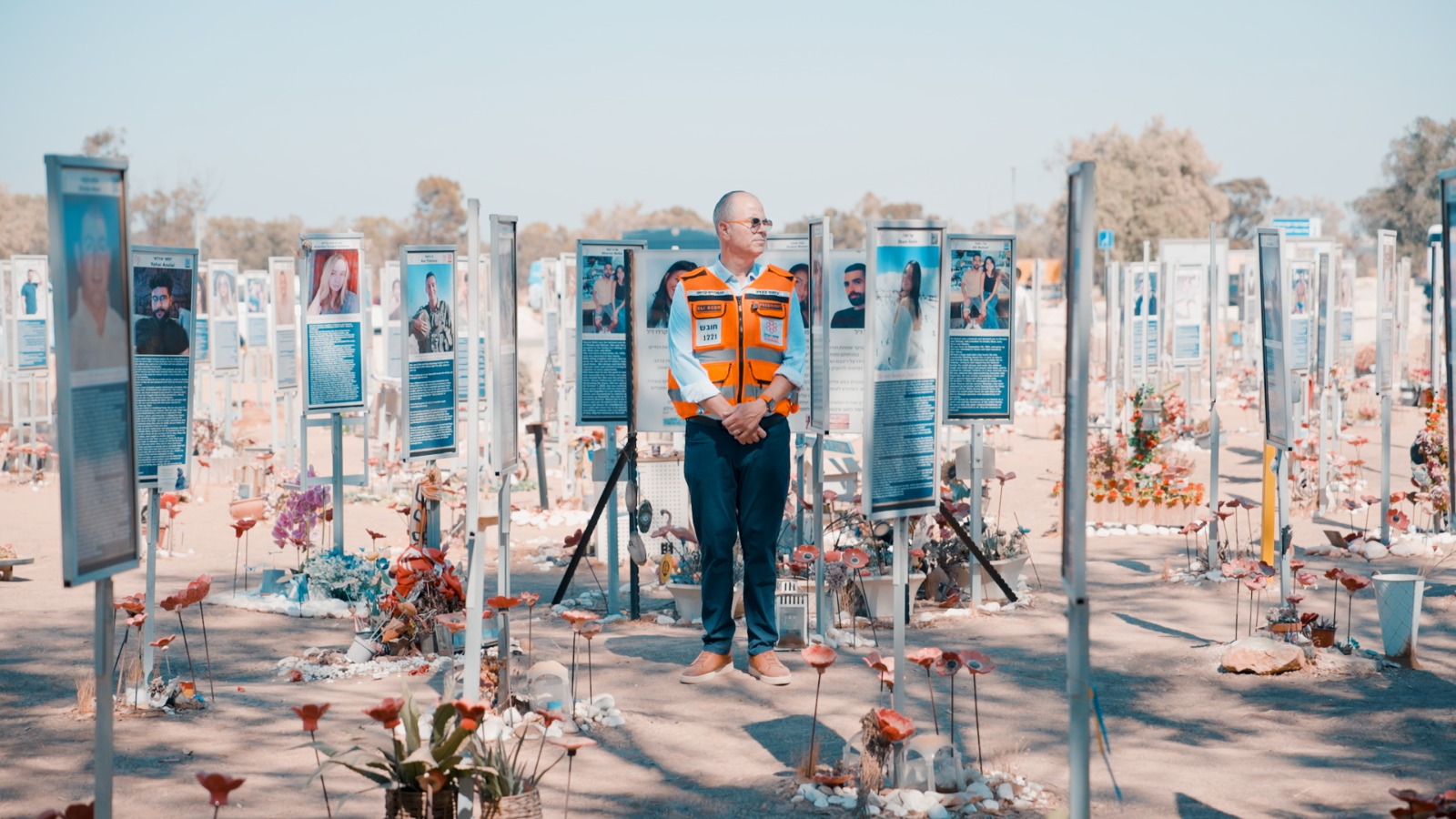
What remains from that day are the burned-out homes and cars, memorial plaques, broken families, and the stories of those who were murdered, those who survived, and those who ran into the inferno trying to save whoever they could.
Shalom Avitan and the Twins
By Saturday evening, United Hatzalah EMT Shalom Avitan was standing outside the gates of Kfar Aza, one of the communities hardest hit on that day. Special forces had been fighting for hours to secure the kibbutz, and Avitan was treating casualties emerging from the battle.
Then several soldiers appeared carrying two babies, twins just 10 months old.
Their parents had been murdered by Hamas terrorists. The babies were crying, hungry, and dehydrated.
A soldier placed one of them in Avitan’s arms. The child grabbed him and would not let go.
Avitan gave the baby something to drink and held the child close. Someone photographed the moment.
There are no terrorists in that photograph. No flames. No bodies. Just a medic holding a baby who had survived something no child should ever have experienced.
Perhaps that is why the image became so powerful. For Israelis searching for something to hold onto that day, it offered a glimpse of hope. In the middle of a massacre intended to extinguish life, someone was still fighting to protect it.
Awad Darawshe’s Bandages
At the Nova festival, 23-year-old paramedic Awad Darawshe, a Muslim Israeli from Iksal, was treating the wounded as terrorists swept through the area.
He was told to evacuate.
He stayed.
“All Awad was concerned with was the injured person in front of him,” United Hatzalah founder and president Eli Beer later said. “Awad continued treating casualties until he was killed. His body was later found with his medical supplies and bandages beside him.”
He was one of several United Hatzalah volunteers killed while treating patients on October 7.
David Milgram and the Unknown Danger
United Hatzalah EMT David Milgram was on his way to synagogue that morning when his United Hatzalah communications device began calling for available volunteers.
“I didn’t even have my cellphone with me,” Milgram remembers. “I put my siddur back on the shelf and ran to the Dispatch Center.”
A short while later, he was inside a brand new United Hatzalah ambulance heading south with another volunteer.
“We were the first ambulance to leave Jerusalem to go down south.”
Near the Helets Interchange, a passing car flagged them down. The driver stopped and opened the rear door. Inside were two young men suffering from gunshot wounds.
Until that moment, Milgram believed he was responding to casualties from rocket attacks.
“That’s what we thought happened,” he recalled. “I had no idea terrorists had invaded Israel.”
As they rushed the wounded men toward the hospital, the story began to emerge. They had fled the Nova festival as terrorists opened fire on their car. Their friend, who had been driving, was killed. The car crashed into a ditch, and the two survivors escaped death by pretending to be dead.
Throughout the day, Milgram treated and evacuated dozens of wounded people.
“As the day progressed, we began to grasp the magnitude of the massacre.”
Again and again, United Hatzalah volunteers entered places where danger was everywhere. They did so despite warnings and, at times, against orders. Their purpose was painfully simple: reach the wounded before it was too late.
Three years have passed, but October 7 has never really ended.
It continued through the funerals and hostage vigils, through repeated rounds of reserve duty, through missiles from Iran, and through the painful realization that some of those taken from us will never return home.
Some stories have been told. Others remain locked inside the people who lived them, still too painful to recall. And there are stories we will never hear because no one survived to tell them.
But one thing cannot be forgotten.
On that dark morning, extraordinary cruelty came face to face with extraordinary compassion. The terrorists came to take life. The men and women in orange came to save it.