It was meant to be a night of pure joy. Family and friends, music and dancing, the kind of celebration people dream of when they imagine their wedding day. That was the vision Sivan and Evyatar Ben Haim carried with them into Monday evening.
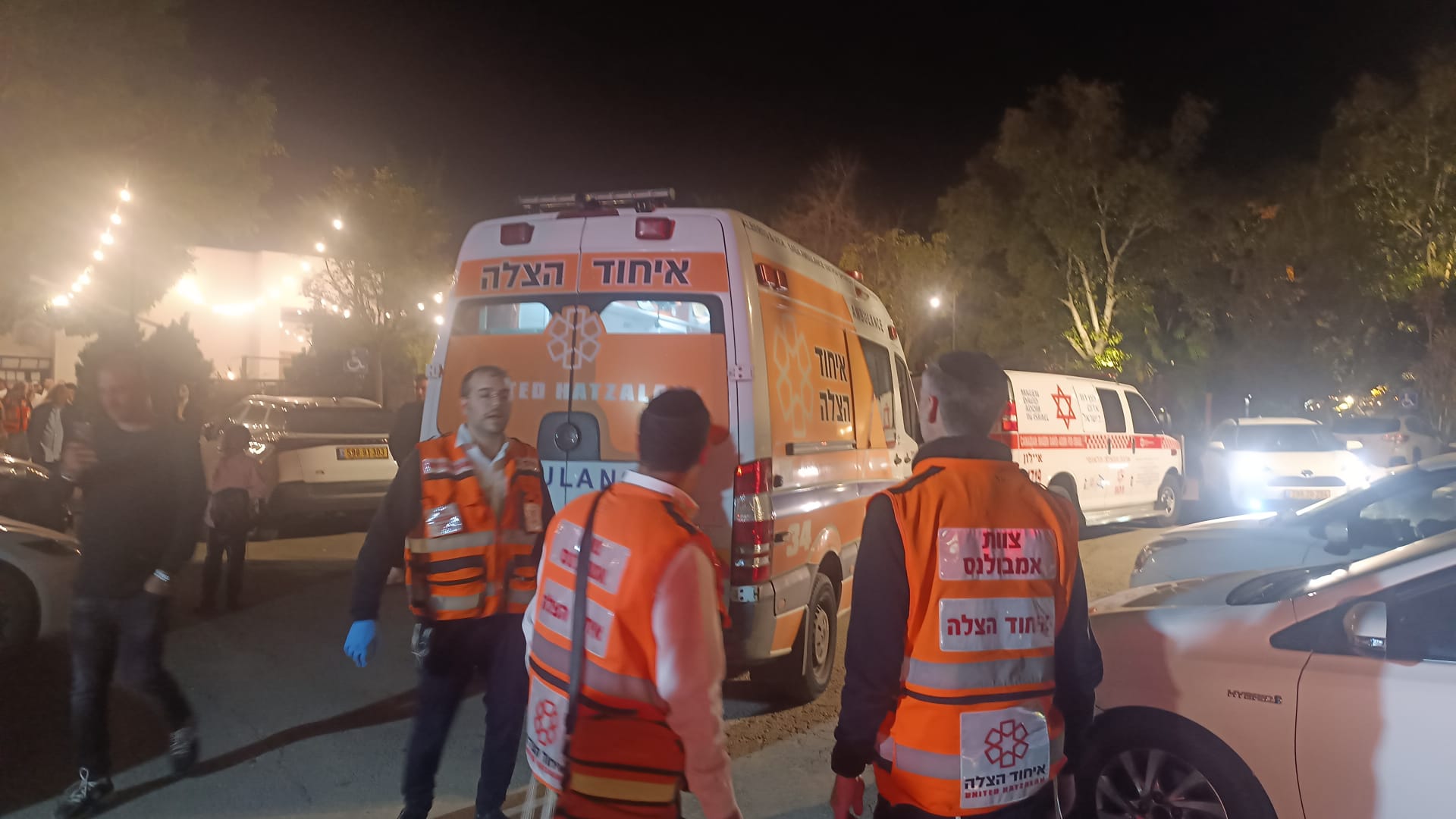
Instead, their wedding celebration, at a beautiful venue in the area of Kibbutz Hulda located in central Israel, was suddenly and abruptly overtaken by orange vests, medical protocols, and flashing ambulance lights.
Shortly after 9:00 p.m., as guests danced on the men’s side of the hall, a small commotion began to form. What initially appeared to be momentary confusion quickly escalated into something far more serious. A man had collapsed on the dance floor.
Among the guests was Ben Sinai, a volunteer EMT with United Hatzalah and a friend of the bride and her family. Ben was not on duty. He had arrived expecting to celebrate, not respond to a medical emergency. And while he was not carrying medical equipment, he was armed with something just as critical: his United Hatzalah training.
When Ben reached the center of the gathering, he saw a man lying unconscious on the floor. He had never met the groom and only realized who the patient was seconds later, when someone shouted the words that instantly altered the emotional gravity of the room. “It’s the groom.”
Almost simultaneously, two additional EMTs, both women and also wedding guests, arrived at the scene. Without hesitation, instinct and experience took over. The team immediately began lifesaving treatment and initiated full resuscitation protocols.
A staff member from the wedding hall rushed in with an automated external defibrillator. CPR was underway as the device was attached and the necessary shocks were delivered. The response was calm, coordinated, and precise, carried out exactly as they had been trained to do.
At the same time, Ben contacted United Hatzalah’s national dispatch center, relaying real time information from the scene and requesting additional medical responders. Recognizing the emotional magnitude of a medical emergency unfolding in the middle of a wedding, he also asked that the organization’s Psychotrauma and Crisis Response Unit be dispatched to support the family.
Within minutes, additional United Hatzalah volunteer medics arrived. Approximately fifteen to twenty minutes later, a paramedic and ambulance crew reached the scene. Care was transferred seamlessly and professionally.
The groom regained a pulse. Unconscious and in serious condition, he was transported to hospital for further treatment.
While the medical emergency concluded inside the hall, the night itself did not simply resume. Guests quietly dispersed, family members waited anxiously, and a celebration meant to mark a beginning was suspended in uncertainty.
Thankfully later in the hospital Evyatar regained consciousness. His first words upon waking were a declaration of love for his new wife. He remains hospitalized and under medical supervision as doctors work to determine the cause of his collapse, but his condition is stable and improving.
For Ben Sinai, the night reinforced a reality familiar to volunteer medics across Israel. They are not always equipped with a medical bag or advanced gear, but they are never unprepared. The rigorous training United Hatzalah volunteers undergo is not just theoretical it is ingrained in muscle memory, enabling them to act decisively under immense pressure, wherever they happen to be.
United Hatzalah’s model is built on this principle. Volunteers embedded within their own communities, trained to respond anytime and anywhere. Sometimes that means racing through traffic on an ambucycle. Sometimes training means being able to step out of the sterile realm of lesson routines and onto a dance floor and into chaos where a life hangs in the balance.
This wedding did not unfold one would have imagined, but thankfully it did end with hope. The newlywed couple were given the chance to write the next chapter; that of a happy life together. This is a reminder to us all that even when celebrations are interrupted, the presence of trained hands and calm minds can still deliver a happy ending that lasts a lifetime.