

A Routine Shift, Five Wounded Soldiers, and the Healing Power of a Sandwich
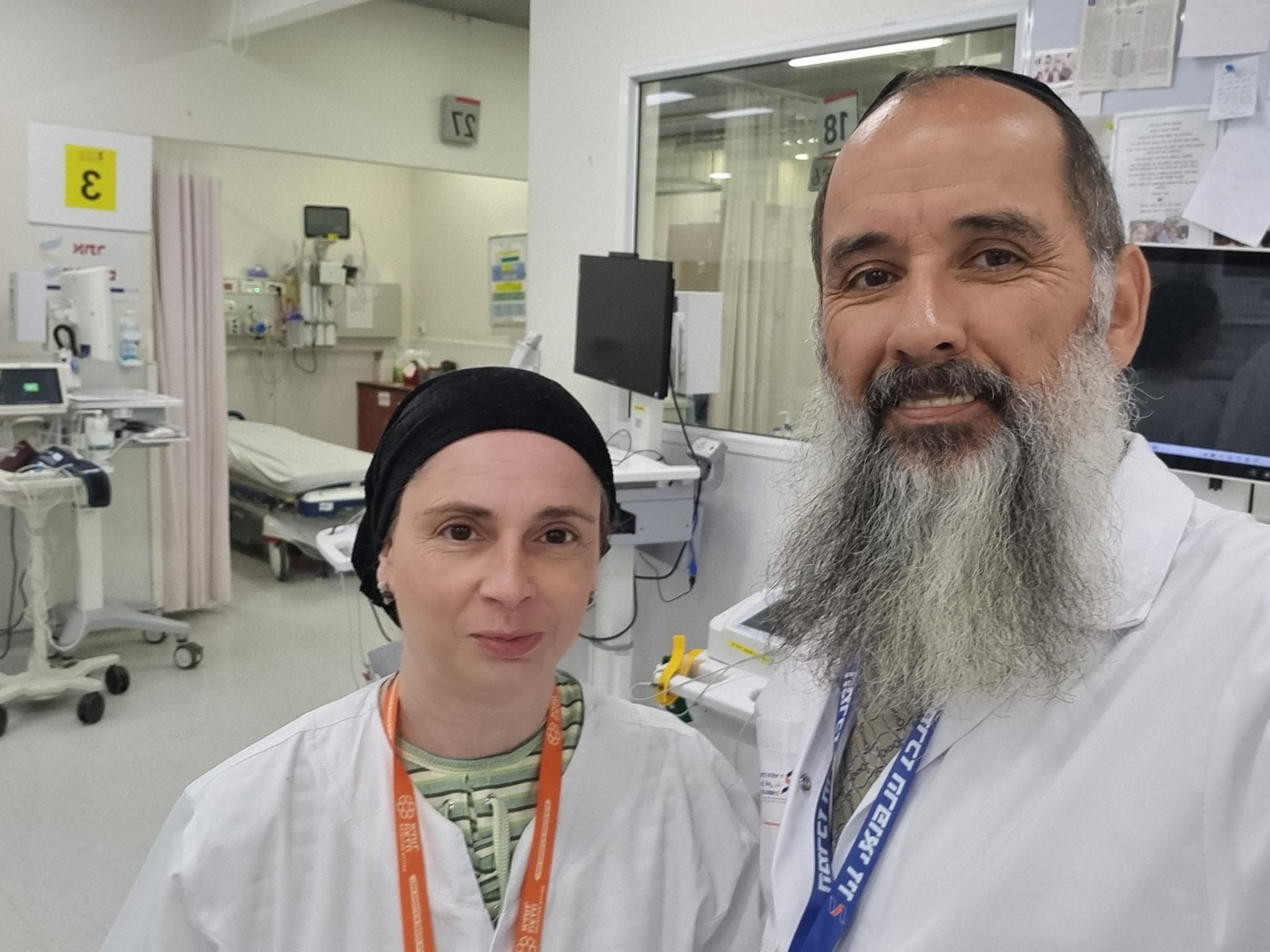
Once a week, my wife Chana and I volunteer together in the Emergency Department at Ziv Medical Center in Tzfat.
It is usually a quiet kind of service. Not because the ER is ever truly quiet, but because that’s the kind of care we are there to provide. We are there to help the nurses, assist the medical staff, support patients, and do whatever is needed with professionalism, patience, and a warm heart.
Last night began like any other routine shift.
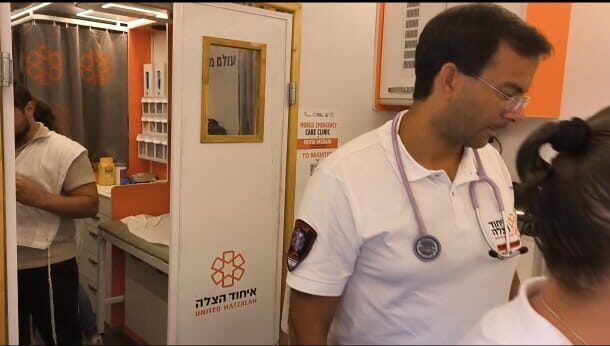
As you know, Chana is also a United Hatzalah EMT, and we walked into the Emergency Department ready to help whoever needed us. Then, in a split second, everything changed.
A group of injured soldiers arrived. About five of them were from one unit, all suffering from different injuries after a road accident. A sixth soldier, from another battalion, had been injured under separate circumstances. Some were in pain. All of them were exhausted. Their faces told the story of the harsh reality of their service in a way no medical report ever could.
They had come from a serious accident in which one of their friends had been severely injured. He was already in the trauma room being treated by the medical team. They were worried about him, worried about each other, and still trying to understand what had happened.
Now it is important to note, that while Tzfat may be located far in Israel’s northern periphery, it is by no means remote and Ziv Hospital is by no means a small town hospital. Especially over the nearly two years of war in the north, Ziv Hospital has received many injured soldiers and civilians. From mortar attacks to gunshot wounds, saying nothing about your everyday medical emergencies. The staff here is excellent and deeply compassionate. We come to help both the medical teams and the patients, and often their families as well, navigate what can only be described as a very difficult and sensitive moment in their lives.
Back to yesterday. We began with the routine medical checks we had been asked to carry out. Blood pressure. Pulse. Basic assessments. The usual questions. Where does it hurt? Can you move this? Are you dizzy? Do you need anything?
But very quickly, we understood that what they needed was not only medical attention.
They needed someone to see them.
They needed someone to sit with them for a moment and speak to them not as patients in beds, but as young soldiers who had just been through something frightening and were now waiting in pain, uncertainty, and fatigue.
We helped make sure they received beds as quickly as possible. They were hurting, and anyone who has ever spent time in an emergency room knows that pain becomes harder to bear when you are waiting, tired, and unsure of what comes next.
Their spirits were low. So, in a way that came naturally, we changed hats. We were still EMTs, still part of the ER support team, but we also became a source of emotional first aid.
We spoke with them. We listened. We encouraged them. Slowly, the tension began to lift.
At one point, the conversation turned personal. They were surprised and encouraged to hear that my wife, despite being a Haredi woman, had served in the IDF. They were even more moved when we told them that our four sons had also served as combat soldiers, and that today they continue to serve as reservists.
Something in that moment changed.
The soldiers began to smile. Then they laughed. The room felt a little less heavy. Their pain did not disappear, and the worry for their friend in the trauma room remained, but for a few minutes they were able to breathe again.
Our hearts were with them. There are moments in emergency medicine when the monitors, bandages, and procedures are only part of the story. Behind every injured person is fear. Behind every uniform is a young man with parents, friends, a unit, and a life that was interrupted in an instant.
So we asked them a simple question.
“What do you need?”
Their answer was immediate.
“We are hungry.”
It was such a human answer. After the accident, after the pain, after the shock, after the worry, they were hungry.
We brought them sandwiches that are kept in the Emergency Department for moments like this. Later, pizzas arrived as well. It may sound simple, but watching them eat, regain some color, talk, laugh, and slowly come back to themselves was deeply moving.
There is something powerful about a perfectly timed sandwich and a slice of pizza. Just as arriving quickly at the scene of an emergency can help save a life, a bite to eat can treat a person’s spirit begins and fill an empty stomach in less than 90 seconds. But even more powerful than food is a kind word, a listening ear, and the reminder that the person in front of you is not alone.
That is what this shift reminded us.
Last night, we did not only help treat the injured. We helped lift their spirits. We helped turn fear into conversation, silence into laughter, and exhaustion into a small moment of comfort.