

On Saturday night, as sirens shattered the quiet that had settled over southern Israel at the end of Shabbat, United Hatzalah volunteers did what they have done time and again since the start of Operation Roaring Lion. They did not hesitate. They ran toward the danger.
Within minutes of two separate direct missile strikes, United Hatzalah’s Heroes in Orange were on the scene, providing urgent medical care to those in need. Volunteer EMTs, paramedics, and physicians responded exactly as they had been trained to do. The scale of what would unfold over the course of the evening was still unclear, but for these men and women, there was only one priority: the emergency in front of them.
The First Impact: Dimona
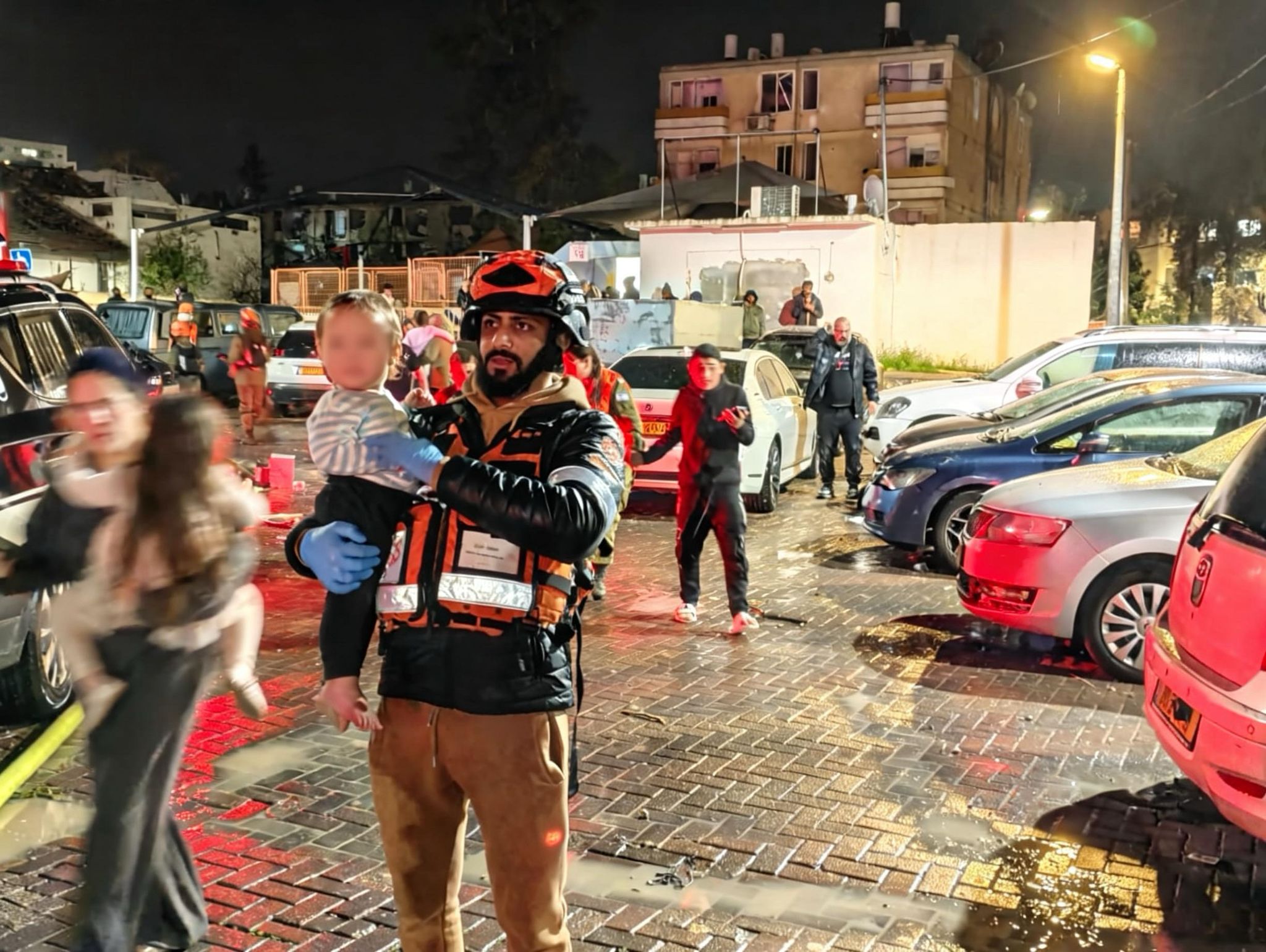
The first reports came shortly before 7:00 p.m., in the midst of heavy rain. United Hatzalah’s National Dispatch Center received word of a direct missile strike in a residential neighborhood in Dimona.
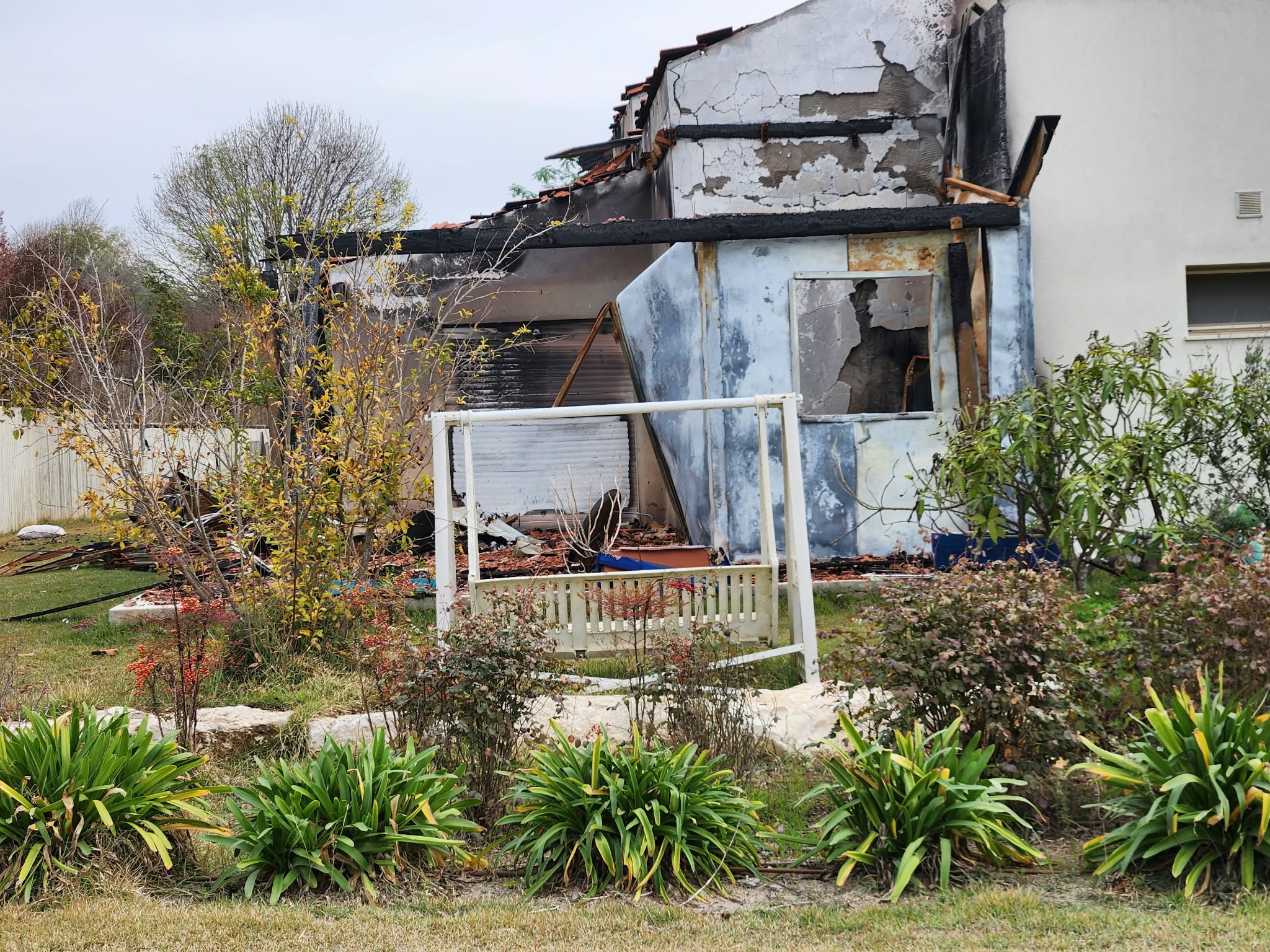
The impact caused extensive destruction. Buildings were damaged, debris was scattered across the area, and dozens of people were injured.
United Hatzalah medics moved quickly through unstable surroundings, assessing casualties, triaging the wounded, and providing immediate treatment. In total, approximately 40 people received care at the scene. Injuries ranged from light wounds to more serious conditions.
Then Came Arad
Before the situation in Dimona had fully stabilized, a second missile struck, this time in Arad. There, an apartment complex in the city sustained a direct hit.
The scale of the devastation was immediately apparent. Multiple structures were damaged, and the number of casualties rose quickly. More than 90 people required medical attention. Among them were 10 listed in serious condition, 13 in moderate condition, and 52 with light injuries. The scene was one of destruction and disorientation, with displaced residents, damaged buildings, and a mounting number of wounded in need of urgent care.
For United Hatzalah’s teams, the challenge was not only the severity of the incidents, but the need to operate simultaneously at two separate mass casualty scenes, each presenting its own dangers and complexities.
Treating the Visible and the Invisible
Alongside the physical injuries, another layer of trauma was unfolding. United Hatzalah’s Psychotrauma and Crisis Response Unit was deployed to both scenes, working alongside medical teams to provide immediate emotional stabilization. Those suffering from shock, anxiety, and acute stress were treated on site, including children and elderly residents who had just lived through the terror of impact.
The organization’s specialized canine unit was also deployed, helping calm survivors in distress and offering an initial measure of emotional relief amid the chaos.
In mass casualty incidents, not every wound can be seen. United Hatzalah’s integrated response is built around that understanding.
A Clinic in the Field
As the night escalated, one of United Hatzalah’s most advanced resources was brought into operation.
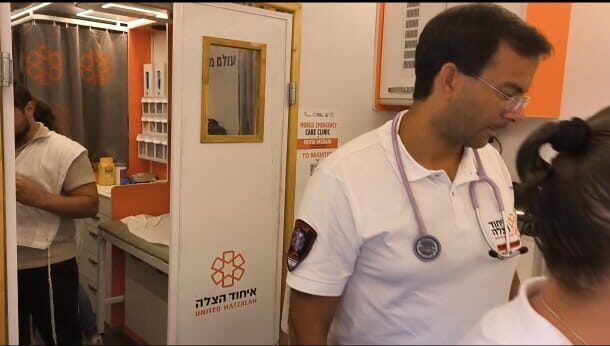
The Mobile Emergency Care Unit, funded by the Ruderman Family Foundation, was deployed to one of the primary scenes and quickly established a centralized hub for treatment and support.
Operating as a fully equipped field clinic, the unit enabled responders to deliver coordinated medical care, psychological assistance, and logistical support in one location. Victims and displaced residents were able to receive help in a structured setting even as emergency activity continued all around them.
In the aftermath of a missile strike, the ability to create order is not a luxury. It is essential.
A Nationwide Response
As the night wore on, additional teams were dispatched from across the country. Coordinated through United Hatzalah’s National Dispatch Center, reinforcements ensured that both Dimona and Arad remained fully supported as treatment, evacuation, and search operations continued.
Behind the scenes, thousands of United Hatzalah volunteers remained on heightened alert. Ambulances, ambucycles, and specialized units were positioned across the country, prepared to respond to any further escalation.
This is the strength of a network built on readiness. Not only the ability to respond, but the ability to sustain that response across multiple fronts, under pressure, and at any hour.