

Today, a different siren sounded across Israel. It did not warn of incoming missiles, yet it carried an urgency and solemnity no less profound. Across the country and around the world, Holocaust Remembrance Day, Yom Hashoah, was observed. It is a day where personal memory meets collective commitment to remember. A day where the stories from the not so distant past are recalled not only out of respect to those who were murdered but as lessons for our lives and contemporary national identity.
In homes, classrooms, and community centers, stories are retold with reverence and pain. Artifacts stand as silent witnesses to a world destroyed by unchecked antisemitism and hatred. The names of six million of our people are recited in our thoughts and prayers.
For United Hatzalah, remembrance is not just a passive exercise. It is a call to responsibility. It lies at the heart of our lifesaving mission to protect human life, regardless of background or ethnicity.
This ethos finds powerful expression in our unique Ten Kavod initiative. The program, funded in part by the Claims Conference, is dedicated to supporting the elderly, many of whom are Holocaust survivors. United Hatzalah volunteers’ visit the elderly participants regularly, provide companionship, and assistance with daily needs and basic medical care. The name itself, “Ten Kavod”, means “Give Honor”. This is not symbolic. It is in fact deeply practical. It is about showing up, week after week, in living rooms and kitchens, not only to provide care, but to listen, to learn, and in many cases, to become witnesses to lives and stories that must be carried forward to future generations.
As Nobel Lauriette Prof. Elie Wiesel, Z”L once said:
” I believe firmly and profoundly that to anyone who listens to a witness to become a witness. So those who hear us, those who read us, those who learn something from us, they will continue to bear witness for us. Until now they are doing it with us but at a certain point in time they will do it for all of us.”
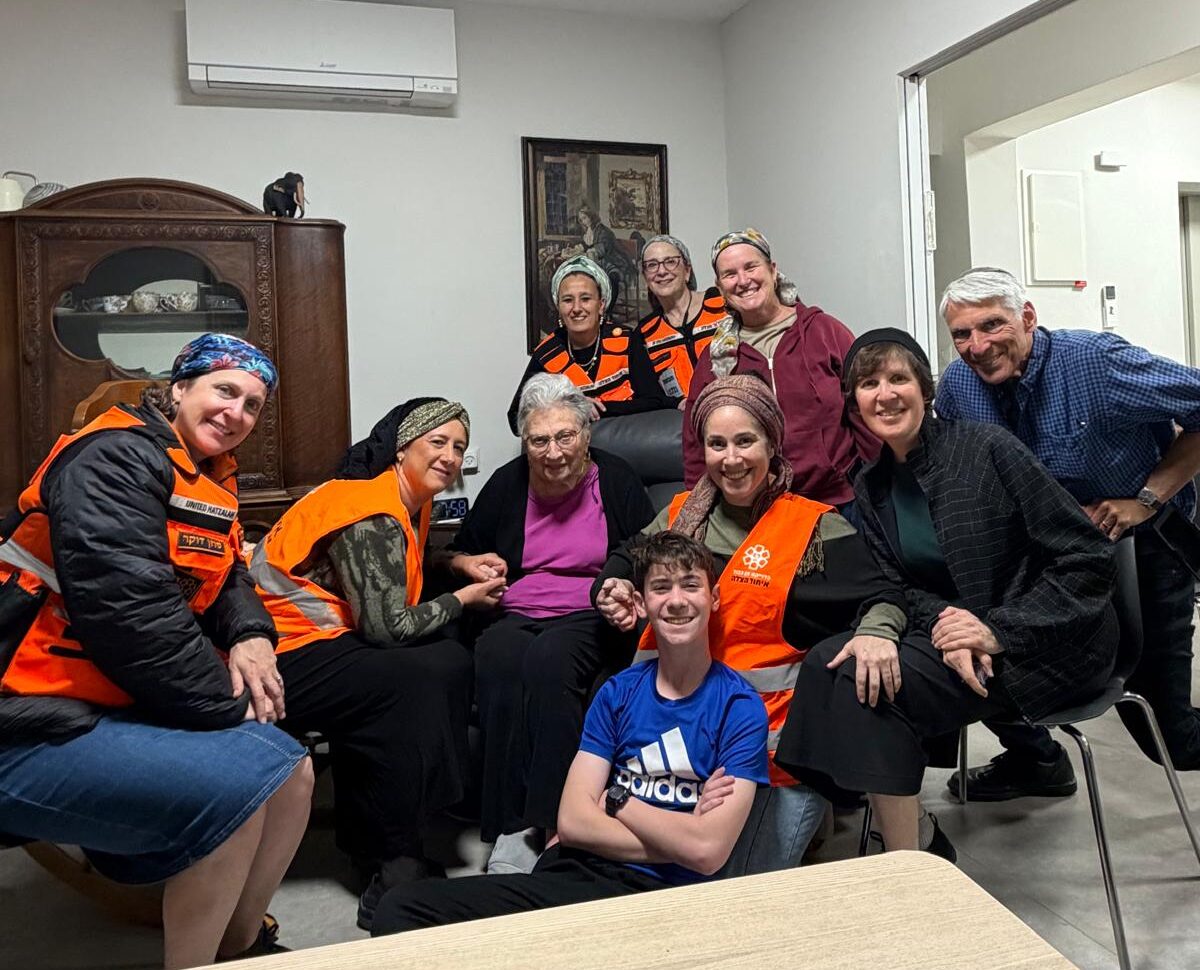
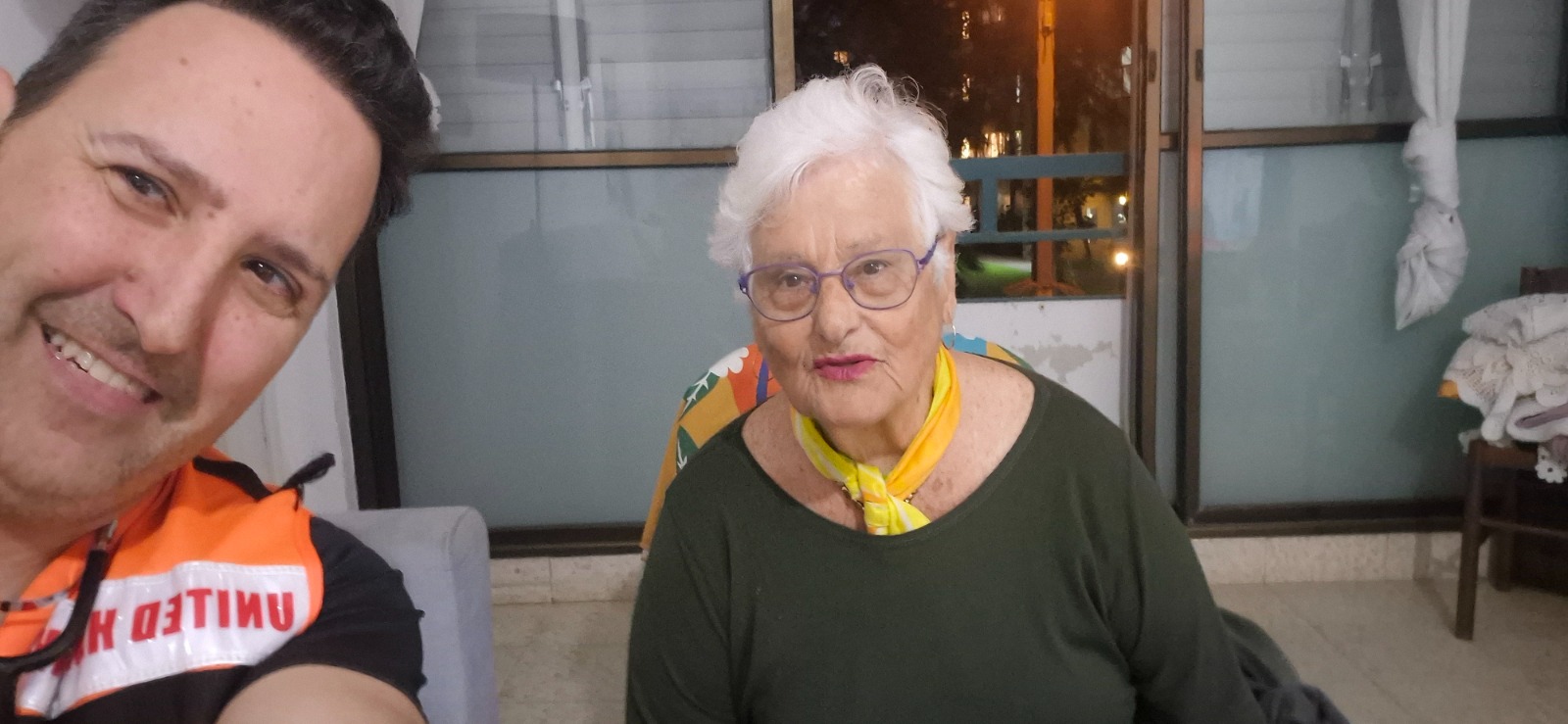
This week, in Beit Shemesh, our Ten Kavod volunteers gathered as part of a “Zikaron BaSalon” initiative, to sit with Holocaust survivor Judy Neiman and her son Haim Margolis. They listened to Judy’s testimony, and in doing so, became part of its continuation of her story.
Among those present was Devorah Green, a devoted volunteer who visits Judy weekly as part of Ten Kavod. These are not ceremonial encounters. They are relationships rooted in trust, empathy, and continuity.
For Founder and President Eli Beer, this connection is deeply personal.
“One of the very first people I ever helped as a young medic was a Holocaust survivor who collapsed in the middle of the street,” Beer has recalled. “That moment stayed with me and helped shape my understanding of what it means to save a life. It is part of the inspiration behind United Hatzalah’s mission.”
As a boy visiting Yad Vashem, the World Holocaust Remembrance Center in Jerusalem, Beer was struck by the scale of destruction. Six million lives, cut short. Six million worlds extinguished. In response, he made a quiet, personal promise. One day, he would help save six million lives.
Today, that promise has been realized. In the years since its founding, United Hatzalah’s volunteers have provided medical assistance to more than 6.5 million individuals. Each call answered, each life touched, stands in quiet defiance of the attempt to annihilate the Jewish people and erase them from history.
But the mission does not end with medical intervention.
“Holocaust survivors are not only individuals in need of medical care,” Beer has said. “They are living witnesses to history. Each one carries a story that the world must never forget.”
That reality is becoming increasingly urgent. With each passing year, the number of living Holocaust survivors continues to diminish. Soon, there will be no firsthand witnesses left to recount the horrors of the Shoah. In that absence, the responsibility shifts to those who listened, those who stood beside them, those who heard their stories firsthand.
Yom Hashoah is only about looking back at history. It is about making a commitment to carry memory forward.
In a world still grappling with antisemitism and violence, the lessons of the past demand more than reflection. They demand action. “Never Again” cannot remain a slogan. Through programs like Ten Kavod, United Hatzalah stands not only ready to respond to emergencies but committed to preserving the voices and legacy of those who endured.
Because remembrance is not only about the past.
It is about the responsibility we carry into the future.