For decades, the EpiPen has been synonymous with lifesaving intervention in moments of severe allergic crisis. Its very name became shorthand for urgency, accessibility, and the thin line between life and death.
Originally developed in the 1970s by Sheldon Kaplan and approved for public use in 1987, the device was adapted from military auto injectors designed to deliver nerve agent antidotes on the battlefield. Its genius lay not in the drug itself, pinephrine had long been known to counter anaphylaxis, but in its delivery. The EpiPen placed that power in the hands of ordinary people. With no medical training required, a parent, teacher, or bystander could administer a precise, lifesaving dose within seconds.
It was, in every sense, revolutionary.
But like many breakthroughs, what began as a solution eventually revealed its limitations. Over time, the EpiPen became increasingly expensive, difficult to procure in large quantities, and constrained by a short shelf life that led to the disposal of vast amounts of unused medication. For a national emergency medical system like United Hatzalah, these limitations translated into a persistent gap in emergency medical treatment and a serious budget concern.
United Hatzalah has now addressed that gap.
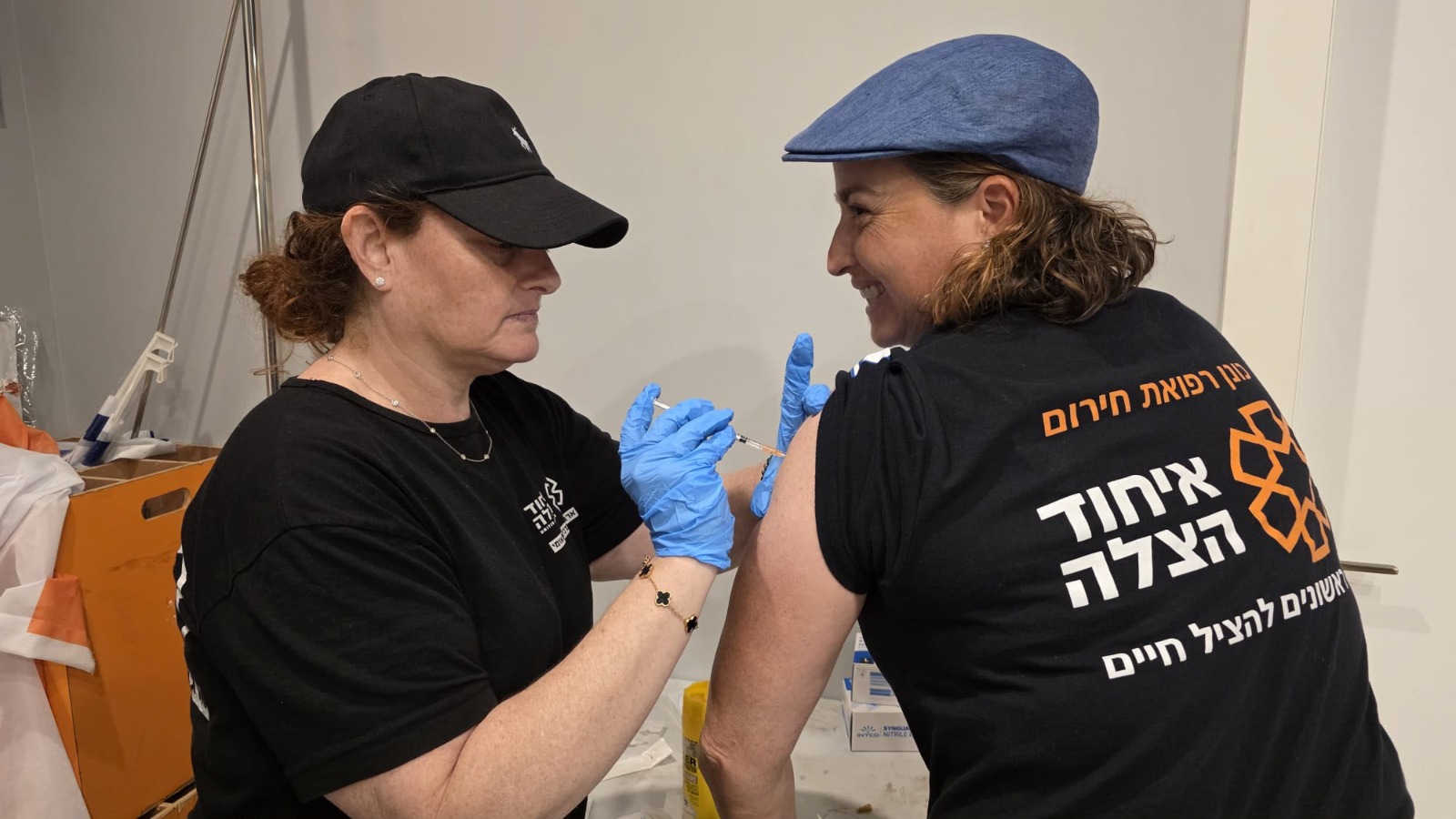
Following a targeted initiative led by United Hatzalah, Israel’s Ministry of Health has approved the use of a newly designed adrenaline delivery kit. This week, the organization began rolling out the first units to 40 EMTs in the Modiin area, marking the beginning of a nationwide protocol that will gradually replace the use of EpiPens. This fundamental shift is reshaping how allergic emergencies are treated in the field.
At its core, the innovation is both simple and transformative.
“We took the EpiPen and broke it down to its fundamentals,” explains Dr. Noam Igra, Head of the Medical Division at United Hatzalah. “An ampule of adrenaline and a delivery system. These are components that are widely available, cost effective, and medically reliable. What we’ve done is repackage them into a single, self contained kit that is easy to carry, easy to use, and easy to distribute at scale.”
The implications are profound.
Where an EpiPen delivers a single fixed dose, the new kit contains a full ampule of adrenaline, allowing trained responders to administer additional doses when necessary. In critical cases, this can mean the difference between stabilization and deterioration in the minutes before a patient arrives at the emergency room.
The design also reflects the realities of emergency care. The syringe is clearly marked for both adult and pediatric dosing, reducing the risk of error in high stress situations. The entire kit is housed in a single container that doubles as a sharps disposal unit once used, addressing both safety and logistics in one convenient package.
Yet beyond its clinical advantages lies an equally significant economic shift.
“An EpiPen can cost hundreds of shekels and must be replaced frequently due to expiration,” Igra adds. “The new kit costs only a fraction of that amount, making it possible to equip far more volunteers while dramatically reducing waste.”
For an organization built on speed, accessibility, and volunteer driven response, the ability to place more lifesaving tools in more hands, and at lower cost, is central to its mission.
The EpiPen changed the world by making lifesaving treatment accessible to anyone. United Hatzalah’s new approach builds on that legacy by ensuring that more of its 10,000 plus volunteers can be trained and equipped to act in those critical moments. In doing so, it creates a new reality, one where scale, precision, and sustainability converge to save lives.